When working with numbers in programming, choosing the right data type matters more than you think.
The debate around double vs float often confuses beginners and even intermediate developers.
Both are used to store decimal numbers, but they differ in precision, memory usage, and performance.
Understanding these differences helps you write more accurate and efficient code. Let’s break it down in simple, developer-friendly terms.
What Is Float in Programming?

A float is a single-precision 32-bit floating-point data type.
It is used to store:
- Decimal numbers
- Real numbers with fractional parts
- Approximate numeric values
Float typically provides about 6–7 decimal digits of precision.
Example in C++:
float number = 3.14159f;
Because float uses less memory, it is often preferred in memory-sensitive applications.
What Is Double in Programming?
A double is a double-precision 64-bit floating-point data type.
It offers:
- Higher precision
- More accurate calculations
- Larger numeric range
Double typically provides about 15–16 decimal digits of precision.
Example:
double number = 3.141592653589793;
Most modern systems default to double for decimal calculations.
Key Differences Between Double and Float
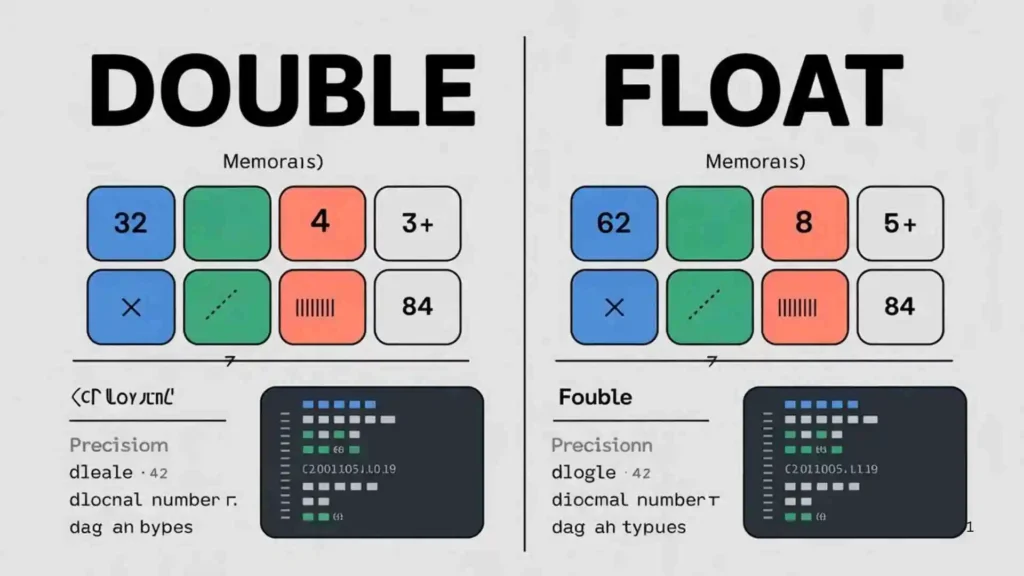
| Feature | Float | Double |
| Size | 32-bit | 64-bit |
| Precision | ~6–7 digits | ~15–16 digits |
| Memory Usage | Lower | Higher |
| Accuracy | Less precise | More precise |
| Default in Many Languages | No | Yes |
In simple terms:
- Float = smaller, faster, less precise
- Double = larger, slower (slightly), more precise
Precision Comparison
Precision is the biggest difference.
For example:
float a = 1.123456789;
double b = 1.123456789;
Float may round after 6–7 digits, while double retains more digits.
If you’re doing:
- Scientific calculations
- Financial computations
- Engineering simulations
Double is usually safer.
Memory Usage Comparison
Float uses 4 bytes, while double uses 8 bytes.
If your application stores millions of numbers (like in gaming or graphics), float may save significant memory.
However, in most modern computers, the memory difference is rarely a major concern.
Performance Differences

In older systems:
- Float was faster
- Double was slower
In modern CPUs:
- Performance difference is minimal
- Double is often optimized equally well
So performance is rarely a deciding factor today.
When Should You Use Float?
Use float when:
- Memory optimization is critical
- You are working in graphics programming
- Slight rounding errors are acceptable
- You’re processing large datasets
Game engines and GPU calculations often use float.
When Should You Use Double?
Use double when:
- Precision is important
- You are handling financial data
- Scientific or engineering accuracy matters
- You want safer default numeric calculations
Most developers prefer double unless memory constraints exist.
Double vs Float in Popular Languages
C and C++
Both float and double are available. Double provides higher precision.
Java
Double is more commonly used for precise calculations. Float requires explicit declaration with “f”.
Python
Python’s float is actually implemented as double precision internally.
Common Mistakes Developers Make
- Using float for financial calculations
- Ignoring precision loss
- Assuming float and double behave identically
- Not understanding rounding errors
Choosing the wrong type can cause subtle bugs.
Conclusion
The double vs float decision depends on precision needs and memory constraints.
Float uses less memory and works well for graphics or large datasets, while double provides greater accuracy and is safer for most applications.
In modern programming, double is usually the better default choice unless you have specific performance or memory requirements.
Understanding this difference helps you write more reliable and efficient code.
Also Check These Posts
- Rate vs APR What’s the Real Difference and Why It Matters for 2026
- Birkin vs Kelly | Which Hermes Bag Is Right for You for 2026

Daniel Brooks
Daniel Brooks is a passionate writer and grammar enthusiast who has spent years exploring the nuances of the English language. Ever since childhood, he has been fascinated by how words shape thoughts and communication. Daniel loves breaking down complex grammar rules into simple, easy-to-understand tips that anyone can apply. His mission is to help learners, writers, and students gain confidence in their writing skills. When he’s not writing, he enjoys reading classic literature and experimenting with creative writing. Daniel believes that mastering grammar is not just about rules, but about expressing yourself clearly and effectively.
Books by Daniel Brooks:
-
The Grammar Guide: Master English with Ease
-
Writing Made Simple: Tips for Clear Communication