When comparing polyamide vs nylon, many people are surprised to learn they’re closely related and sometimes even the same material.
If you’ve ever checked a clothing label and wondered if polyamide is different from nylon, you’re not alone.
These materials are widely used in fashion, industrial manufacturing, automotive parts, and sports equipment.
Understanding their differences (and similarities) can help you make better buying decisions, if you’re choosing activewear or selecting industrial components. Let’s break it all down clearly and simply.
What Is Polyamide?
Polyamide is a type of synthetic polymer made from repeating amide bonds. It can be either natural or synthetic.
- Natural polyamide: Proteins like silk and wool
- Synthetic polyamide: Industrial plastics and textile fibers
Polyamide materials are known for:
- High durability
- Excellent elasticity
- Strong resistance to abrasion
- Lightweight feel
It’s commonly used in clothing, carpets, machine parts, and engineering plastics.
What Is Nylon?
Nylon is a specific type of synthetic polyamide. It was first introduced in the 1930s as a revolutionary synthetic fiber.
There are different types, including:
- Nylon 6
- Nylon 6,6
Nylon became popular because it is:
- Extremely strong
- Flexible
- Resistant to wear
- Affordable
Today, nylon is used in clothing, ropes, parachutes, automotive parts, and even toothbrush bristles.
Are Polyamide and Nylon the Same?
Short answer: Yes and no.
- All nylon is polyamide.
- But not all polyamide is nylon.
“Polyamide” is the broader chemical category.
“Nylon” is a specific brand and type within that category.
In clothing labels, polyamide usually refers to nylon fiber.
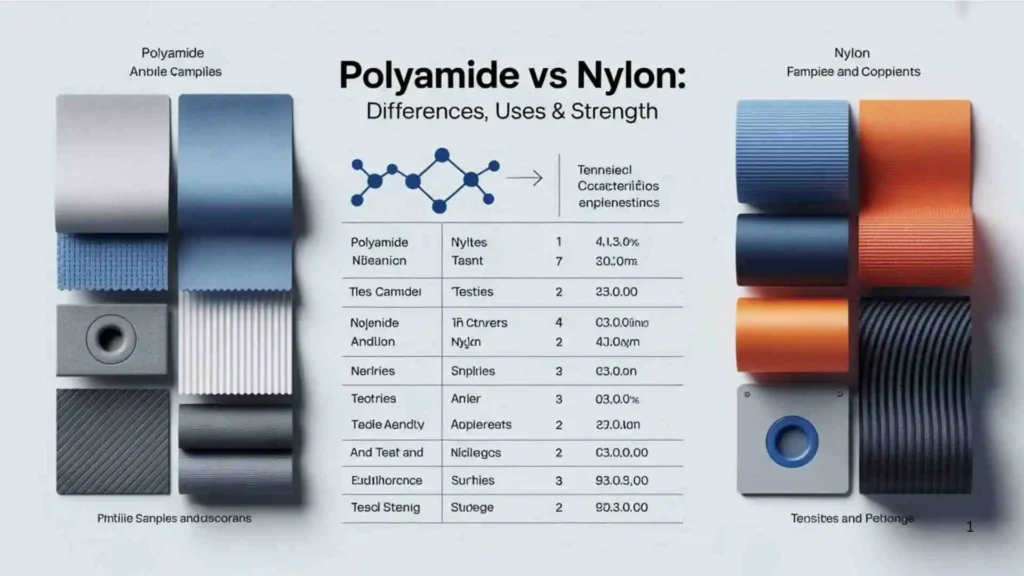
Polyamide vs Nylon – Key Differences
1️⃣ Chemical Composition
Both are made from amide linkages. However, nylon typically refers to synthetic petroleum-based polyamides like Nylon 6 or Nylon 6,6.
2️⃣ Strength & Durability
Both materials are very strong, but nylon (especially Nylon 6,6) is slightly stronger and more heat resistant.
Winner: Nylon (slight edge)
3️⃣ Water Resistance
Neither material is fully waterproof, but both are water-resistant and quick-drying.
Winner: Tie
4️⃣ Flexibility
Polyamide fibers are highly elastic and flexible, making them ideal for sportswear.
Winner: Tie
5️⃣ Heat Resistance
Nylon 6,6 handles higher temperatures compared to standard polyamide variations.
Winner: Nylon
6️⃣ Cost
Both are affordable compared to natural fibers. Pricing depends on grade and quality.
Winner: Depends on application
Advantages & Disadvantages
Polyamide Pros
- Lightweight
- Stretchy
- Durable
- Smooth texture
Polyamide Cons
- Can pill over time
- Not very breathable
Nylon Pros
- Very strong
- High abrasion resistance
- Long lifespan
Nylon Cons
- Can melt under high heat
- Petroleum-based (environmental concerns)
Uses Comparison
| Application | Polyamide | Nylon |
| Clothing | Yes | Yes |
| Activewear | Excellent | Excellent |
| Ropes | Yes | Highly Preferred |
| Industrial Gears | Limited | Highly Used |
| Carpets | Yes | Yes |
For industrial use, nylon is often preferred due to superior mechanical strength.
Environmental Impact
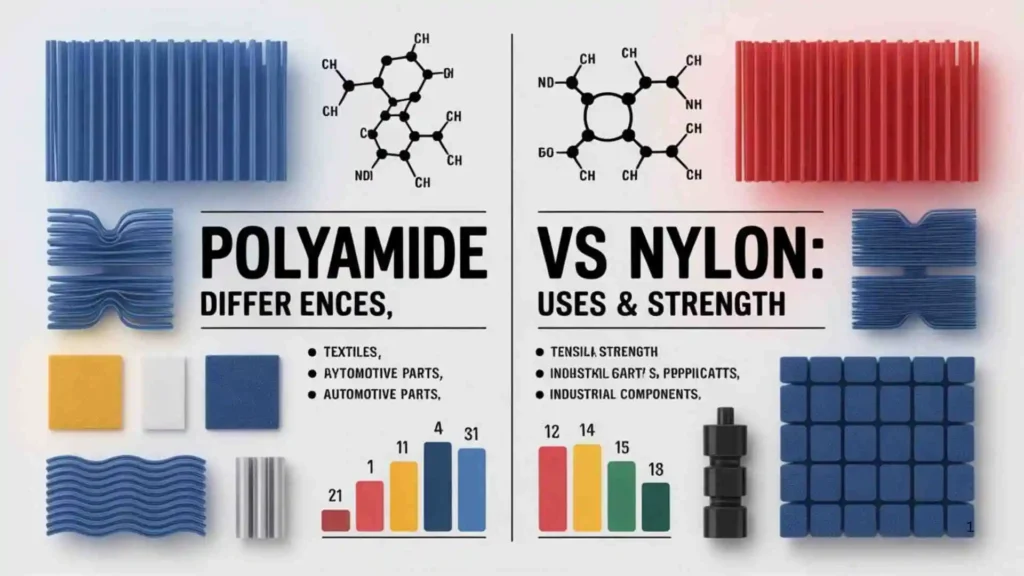
Both materials are synthetic and petroleum-based, which raises sustainability concerns.
However:
- Recycled nylon options are increasing.
- Bio-based polyamides are emerging in eco-friendly manufacturing.
If sustainability matters, look for recycled versions.
Which One Should You Choose?
- For clothing: Either works well — labels may say polyamide but mean nylon.
- For heavy-duty industrial use: Nylon 6,6 is usually better.
- For sportswear: Polyamide blends are excellent due to stretch.
- For high-heat environments: Nylon performs slightly better.
In most consumer situations, the difference is minimal.
FAQs
Is polyamide waterproof?
No, but it is water-resistant and dries quickly.
Is nylon stronger than polyamide?
Nylon is a type of polyamide and is often slightly stronger.
Why do clothing labels say polyamide instead of nylon?
Polyamide is the technical chemical term.
Conclusion
The polyamide vs nylon debate isn’t about which is better, it’s about understanding their relationship. Nylon is a type of polyamide, and both materials offer durability, flexibility, and affordability.
For everyday clothing, the difference is minimal. For engineering and industrial applications, nylon (especially Nylon 6,6) often has a performance edge.
Choose based on your specific need — not just the name on the label.
Also Check These Posts
- Torque vs Horsepower What’s the Real Difference in Car Performance for 2026
- 1440p vs 1080p Which Resolution Is Better for Gaming and Everyday Use for 2026

James Carter
Hi, I’m James Carter, a passionate language enthusiast and grammar geek. I’ve spent years exploring the nuances of English, helping students and writers improve their writing one rule at a time. Writing isn’t just my profession—it’s my way of making communication clearer and more fun for everyone. When I’m not dissecting sentences or hunting down grammar mysteries, you can find me reading classic literature or experimenting with creative writing. I love sharing tips and tricks that make learning English simple and enjoyable. Through my work, I aim to make grammar approachable, interesting, and never intimidating.
Books by James Carter:
-
Mastering English Grammar: A Complete Guide
-
Writing with Confidence: Grammar Made Easy