
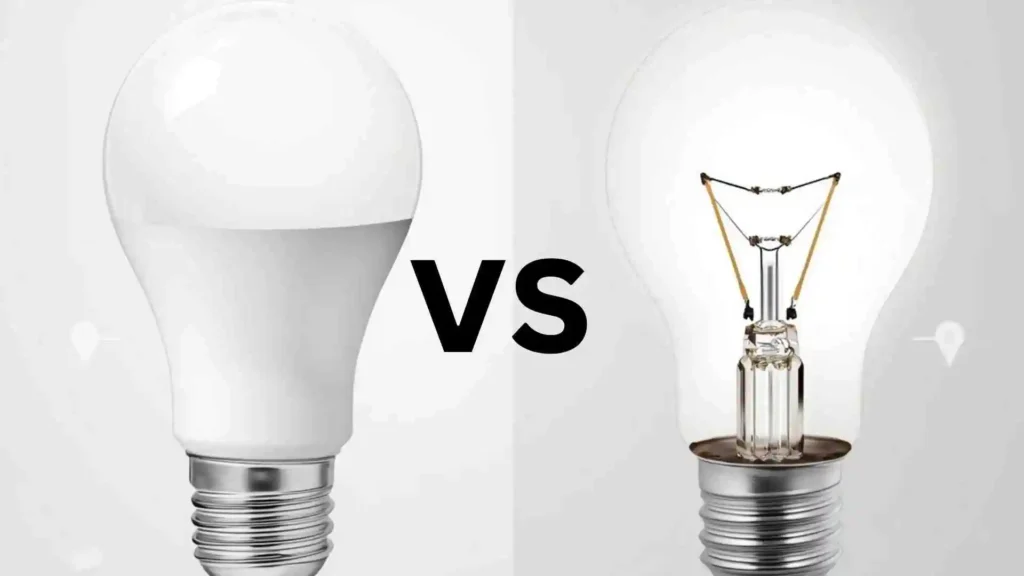
Choosing the right light bulb can save you money, energy, and hassle. If you’re stuck between LED vs incandescent, you’re not alone.
LED vs incandescent bulbs can feel confusing—especially when both promise bright light but work very differently. The real differences in simple terms—so you can confidently pick the best option for your home or office.
In this guide, we’ll break down the real differences in energy use, lifespan, cost, and performance so you can make the smartest choice for your home.
If you’re upgrading old bulbs or planning a lighting makeover, this article is written just for you.
What Is an LED Bulb?
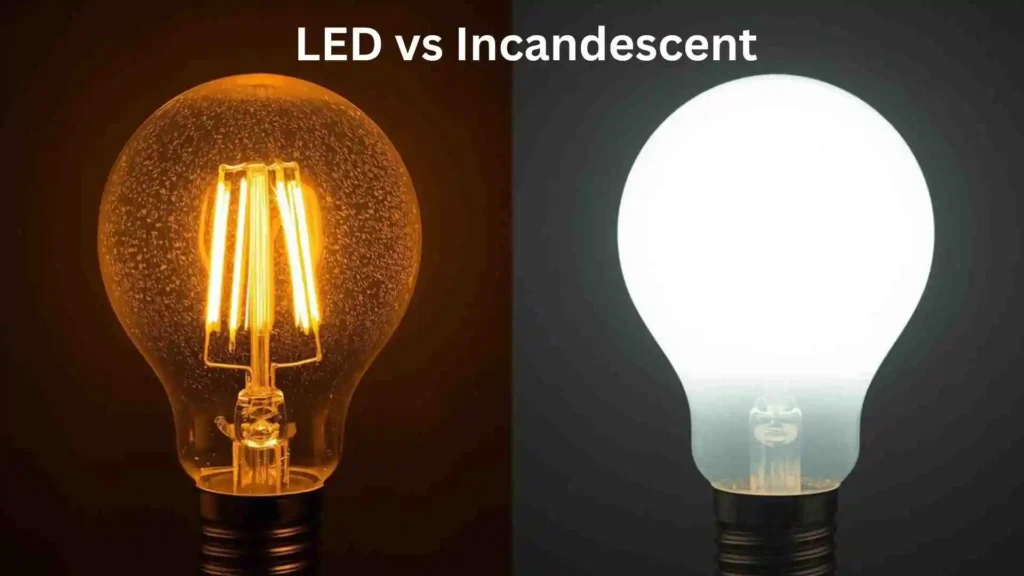
LED stands for Light Emitting Diode. These bulbs use advanced semiconductor technology to produce light efficiently. LEDs consume very little electricity, stay cool, and last for years—making them the modern standard for lighting.
What Is an Incandescent Bulb?
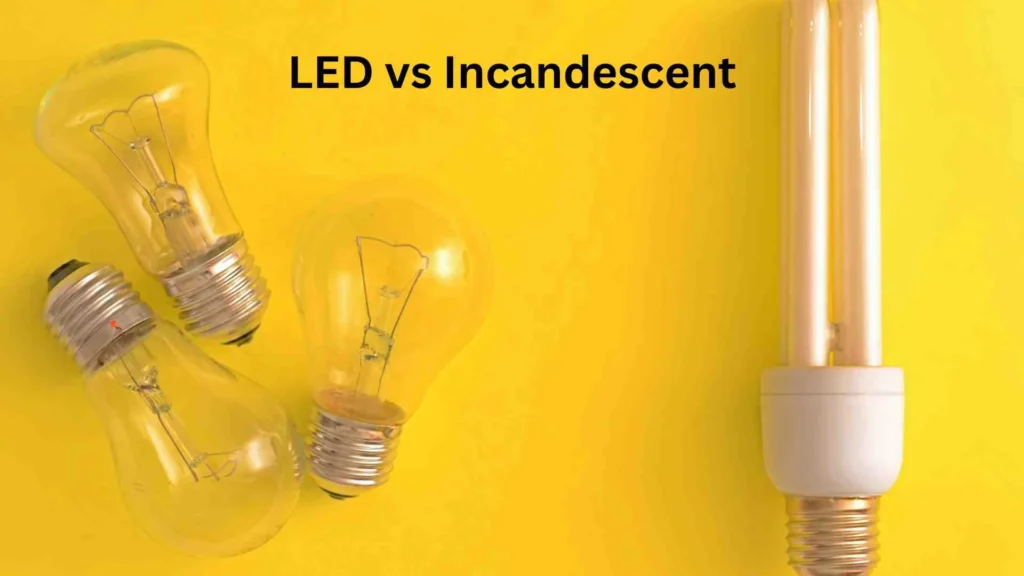
Incandescent bulbs are the traditional lights most of us grew up with. They work by heating a tiny filament until it glows. While they provide warm light, they waste most energy as heat and burn out quickly.
LED vs Incandescent – Key Differences at a Glance
| Feature | LED Bulbs | Incandescent Bulbs |
| Energy Use | Very low | Very high |
| Lifespan | 15,000–50,000 hours | 1,000–2,000 hours |
| Heat Output | Minimal | Extremely hot |
| Cost Over Time | Very cheap | Expensive |
| Eco-Friendly | Yes | No |
| Durability | Strong | Fragile |
Energy Efficiency Comparison
When comparing LED vs incandescent energy consumption, LEDs win by a huge margin.
LED bulbs use up to 85% less electricity than incandescent bulbs. For example, a 10W LED provides the same brightness as a 60W incandescent. That difference shows up clearly on your electric bill.
Lifespan and Durability
LEDs can last 15–25 times longer than incandescent bulbs. While an incandescent may burn out within a year, LEDs often last over a decade with normal use.
Plus, LEDs don’t have fragile filaments, making them far more resistant to shocks and vibrations.
Brightness and Light Quality
Many people assume incandescent light looks better—but modern LEDs now offer:
- Warm white
- Cool white
- Daylight tones
- Dimmable options
So when comparing LED vs incandescent brightness, both can be equally bright—but LEDs give you more control over color temperature.
Cost Comparison (Upfront vs Long-Term)
At first glance, incandescent bulbs seem cheaper. But that’s misleading.
- Incandescent bulb: cheap upfront, expensive to run
- LED bulb: higher upfront cost, massive savings long-term
Over time, LEDs save hundreds of dollars in electricity and replacement costs.
Heat Output and Safety
Incandescent bulbs convert nearly 90% of energy into heat, making them hot to touch and increasing fire risk.
LED bulbs stay cool, making them safer for homes, kids’ rooms, and enclosed fixtures.
Environmental Impact
LEDs are much more eco-friendly because:
- They use less electricity
- They last longer (less waste)
- They contain no toxic materials
Incandescent bulbs increase carbon emissions and contribute more landfill waste.
Pros and Cons of LED vs Incandescent
✅ LED Pros
- Extremely energy efficient
- Long lifespan
- Cool operation
- Eco-friendly
- Lower bills
❌ LED Cons
- Higher upfront price
✅ Incandescent Pros
- Warm natural light
- Low initial cost
❌ Incandescent Cons
- Short lifespan
- High electricity use
- Produces excess heat
- Not environmentally friendly
Which One Should You Choose?
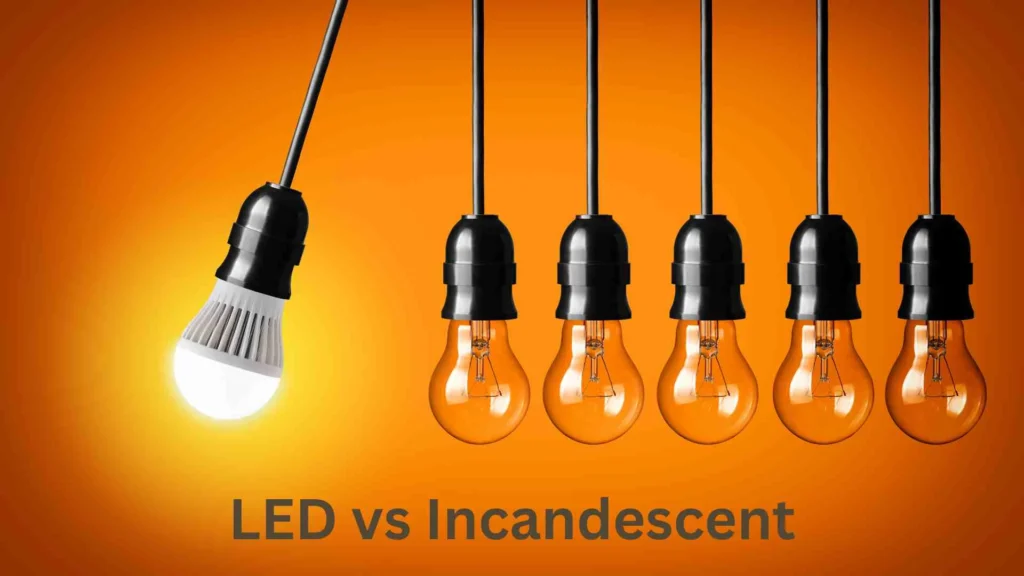
If you care about saving money, reducing energy use, and helping the environment, LEDs are the clear winner.
Incandescent bulbs only make sense for very short-term or decorative use. For everyday lighting, LEDs are better in almost every way.
Common Myths About LED and Incandescent Bulbs
Myth: LEDs are too expensive
👉 Truth: They pay for themselves quickly.
Myth: LEDs don’t look natural
👉 Truth: Modern LEDs offer warm, soft lighting.
Myth: Incandescent bulbs are more reliable
👉 Truth: LEDs last much longer.
✅ Conclusion
When it comes to LED vs incandescent, LEDs dominate in energy efficiency, lifespan, safety, and cost savings.
While incandescent bulbs may feel familiar, they simply can’t compete with modern LED technology.
Switching to LEDs is one of the easiest ways to lower your electricity bill and upgrade your home lighting for the future.

Emma Johnson
Hi! I’m Emma Johnson, a passionate writer and grammar enthusiast who loves exploring the magic of words. For as long as I can remember, I’ve been fascinated by how language shapes ideas and connects people. Through my writing, I aim to make grammar simple, fun, and accessible for everyone. I enjoy sharing tips, tricks, and little-known rules that help readers improve their writing confidently. When I’m not writing, you’ll usually find me reading classic novels, journaling, or sipping coffee while brainstorming new ideas. Writing is not just my profession—it’s my way of inspiring others to express themselves clearly and creatively.
Books by Emma Johnson:
-
Grammar Made Simple
-
Mastering English Essentials
