

Choosing between methocarbamol vs cyclobenzaprine can feel overwhelming—especially when you’re dealing with painful muscle spasms.
Both medications are commonly prescribed muscle relaxers, but they work differently and come with unique side effects.
This guide breaks everything down in simple terms so you can understand your options clearly.
What Is Methocarbamol?

Methocarbamol is a centrally acting muscle relaxant often prescribed for muscle spasms caused by injuries, strains, or sprains.
It works by calming the nervous system, helping muscles relax indirectly rather than acting directly on muscle tissue.
It’s frequently chosen because it tends to cause less sedation than many other muscle relaxers.
What Is Cyclobenzaprine?
Cyclobenzaprine (commonly known by the brand name Flexeril) is another muscle relaxer used for short-term treatment of muscle spasms.
It’s chemically similar to certain antidepressants and works by blocking pain signals between the brain and muscles.
Cyclobenzaprine is known to be more sedating, which can help with nighttime pain but may interfere with daytime activities.
Methocarbamol vs Cyclobenzaprine — Quick Comparison

| Feature | Methocarbamol | Cyclobenzaprine |
|---|---|---|
| Drug Class | Muscle relaxant | Muscle relaxant |
| Sedation | Mild–moderate | Moderate–high |
| Common Use | Muscle spasms | Muscle spasms |
| Onset | Relatively fast | Moderate |
| Drowsiness | Less common | More common |
| Typical Duration | Short-term | Short-term |
How Each Medication Works
Neither drug fixes the underlying injury. Instead, both reduce muscle tension by acting on the central nervous system, helping decrease discomfort while your body heals.
Cyclobenzaprine also affects serotonin pathways, which explains its stronger sedative effects.
Effectiveness for Muscle Spasms and Back Pain
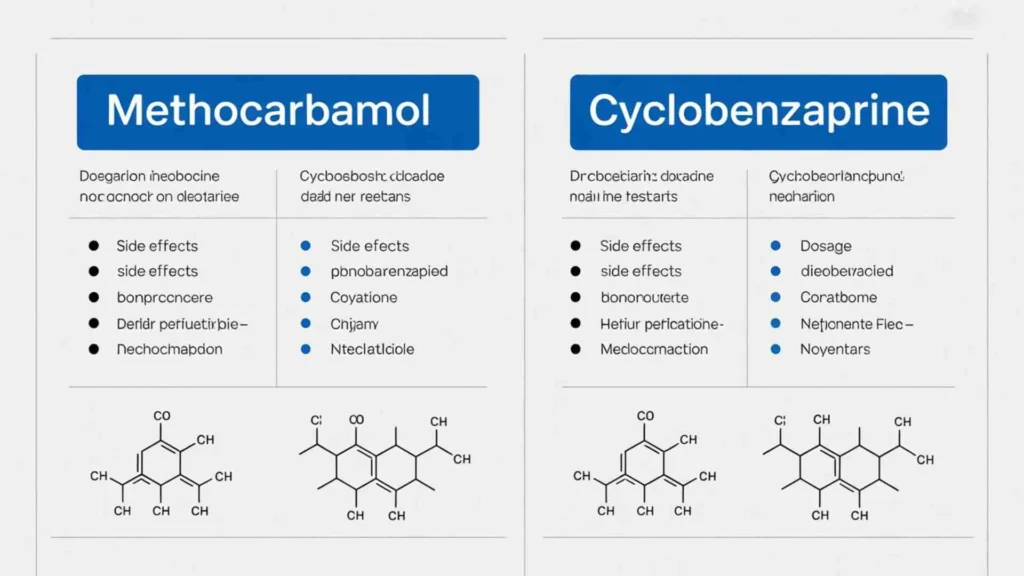
When comparing cyclobenzaprine vs methocarbamol for back pain, studies show both can be effective.
- Cyclobenzaprine may provide stronger relief for severe spasms.
- Methocarbamol is often preferred for people who want relief without heavy drowsiness.
Effectiveness varies from person to person.
Side Effects Comparison
Methocarbamol Common Side Effects
- Dizziness
- Mild drowsiness
- Headache
- Nausea
Cyclobenzaprine Common Side Effects
- Significant drowsiness
- Dry mouth
- Fatigue
- Constipation
- Confusion (especially in older adults)
Drowsiness and Sedation Levels
This is one of the biggest differences.
If staying alert is important (work, driving, daily tasks), methocarbamol is usually the better option. Cyclobenzaprine is more likely to make you sleepy and is often taken at night.
Dosage and Typical Use
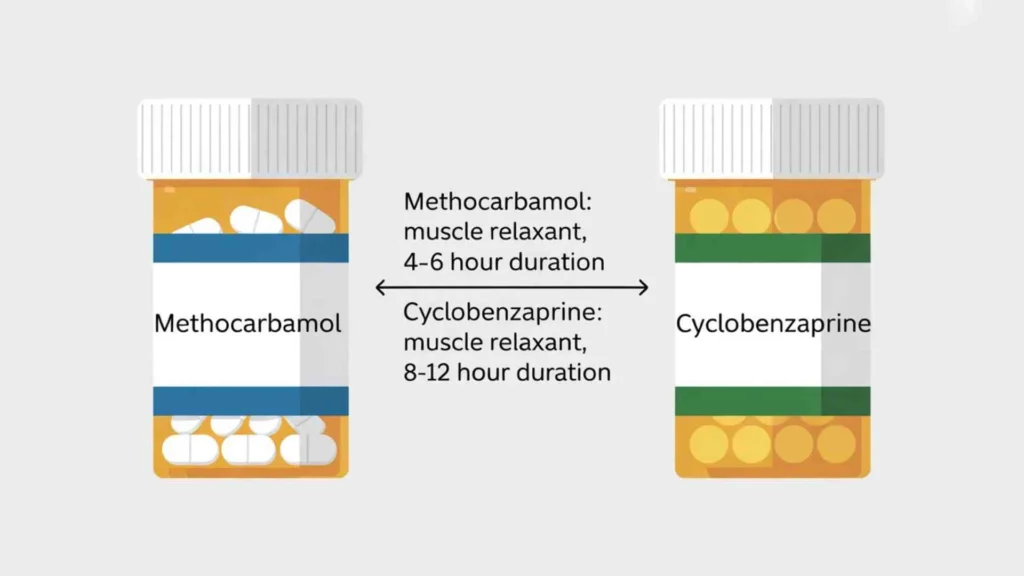
Both medications are typically prescribed for short-term use only (usually 2–3 weeks).
- Methocarbamol may be taken multiple times per day.
- Cyclobenzaprine is often taken once daily or at bedtime.
Always follow your doctor’s instructions.
Cost and Availability
Both drugs are available as generics and are generally affordable. Prices vary by pharmacy and insurance, but neither is considered expensive.
Safety Considerations and Warnings
- Avoid alcohol with either medication.
- Both can impair coordination.
- Cyclobenzaprine should be used cautiously in older adults.
- Neither is recommended for long-term use.
Always tell your doctor about other medications you’re taking to avoid interactions.
Pros and Cons of Methocarbamol vs Cyclobenzaprine
✅ Methocarbamol Pros
- Less sedating
- Better for daytime use
- Fewer cognitive side effects
❌ Methocarbamol Cons
- May feel weaker for severe spasms
✅ Cyclobenzaprine Pros
- Stronger muscle relaxation
- Helpful for nighttime pain
❌ Cyclobenzaprine Cons
- Causes more drowsiness
- More anticholinergic side effects
Which One Should You Choose?

There’s no universal “winner.”
- Choose methocarbamol if you want relief with less sleepiness.
- Choose cyclobenzaprine if nighttime spasms are your main problem and sedation isn’t an issue.
Your doctor will consider your symptoms, lifestyle, and medical history when prescribing.
✅ Conclusion
When comparing methocarbamol vs cyclobenzaprine, both are effective muscle relaxers—but they serve different needs.
Methocarbamol is typically better for daytime use with fewer sedating effects, while cyclobenzaprine may provide stronger relief but often causes drowsiness.
Understanding these differences can help you have a more informed conversation with your healthcare provider and choose the option that fits your life best.

Emma Johnson
Hi! I’m Emma Johnson, a passionate writer and grammar enthusiast who loves exploring the magic of words. For as long as I can remember, I’ve been fascinated by how language shapes ideas and connects people. Through my writing, I aim to make grammar simple, fun, and accessible for everyone. I enjoy sharing tips, tricks, and little-known rules that help readers improve their writing confidently. When I’m not writing, you’ll usually find me reading classic novels, journaling, or sipping coffee while brainstorming new ideas. Writing is not just my profession—it’s my way of inspiring others to express themselves clearly and creatively.
Books by Emma Johnson:
-
Grammar Made Simple
-
Mastering English Essentials

