In today’s fast-paced work environment, the terms “leader” and “manager” are often used interchangeably—but they are not the same.
While both roles are essential for organizational success, they differ in mindset, approach, and impact.
Influential thinkers like Peter Drucker and John C. Maxwell have long emphasized the distinction between managing tasks and leading people.
In this guide, we’ll break down the key differences between a leader vs manager to help you understand which skills truly matter.
What Is a Leader?
A leader is someone who inspires, motivates, and guides people toward a shared vision.
Key Traits:
- Visionary thinking
- Strong communication
- Ability to inspire others
- Focus on growth and innovation
Leaders prioritize people over processes and aim to create long-term success.
What Is a Manager?
A manager is responsible for planning, organizing, and overseeing tasks to achieve specific goals.
Core Responsibilities:
- Setting objectives
- Monitoring performance
- Managing resources
- Ensuring deadlines are met
Managers focus on efficiency, structure, and execution.
Key Differences Between a Leader and a Manager
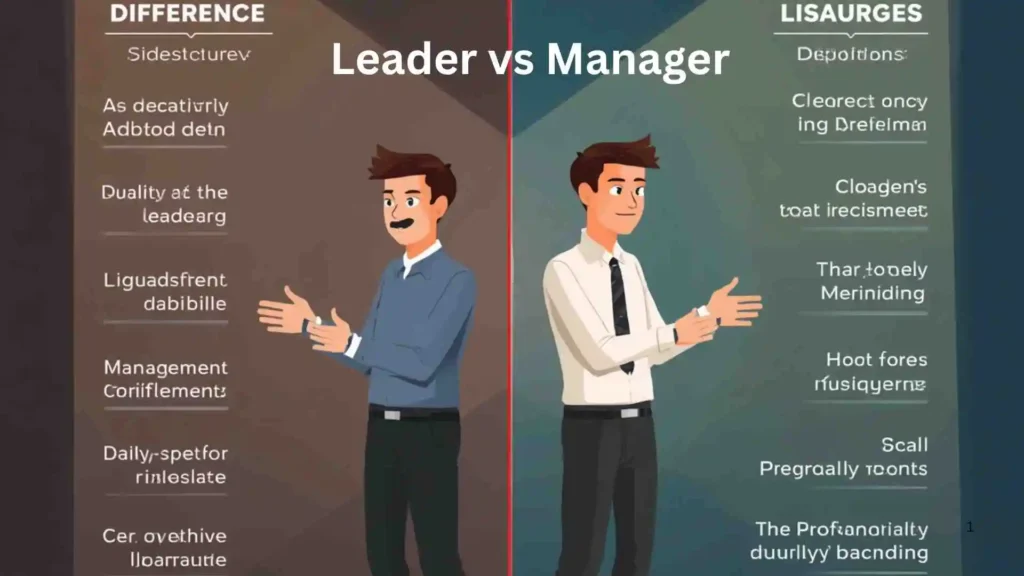
| Aspect | Leader | Manager |
| Focus | People | Processes |
| Goal | Vision & growth | Stability & results |
| Approach | Inspires | Directs |
| Risk | Takes risks | Minimizes risks |
Leadership vs Management Skills
Leadership Skills
- Emotional intelligence
- Vision setting
- Motivation and influence
Management Skills
- Organization
- Planning
- Problem-solving
Both skill sets are important, but they serve different purposes.
Real-World Examples
- A leader motivates a team during change and uncertainty
- A manager ensures projects are completed on time and within budget
For example, during a company crisis:
- The leader inspires confidence
- The manager creates a structured recovery plan
Can a Manager Be a Leader?
Yes—the best professionals are both leaders and managers.
- A manager becomes a leader by inspiring their team
- A leader becomes more effective with strong management skills
Combining both leads to better team performance and long-term success.
Pros and Cons of Being a Leader
Pros
- Inspires innovation
- Builds strong teams
- Drives long-term vision
Cons
- May lack structure
- Can overlook short-term goals
Pros and Cons of Being a Manager
Pros
- Ensures efficiency
- Maintains organization
- Delivers consistent results
Cons
- Can feel rigid
- May limit creativity
Which Is More Important in the Workplace?
Neither is more important—they complement each other.
- Leadership drives change and vision
- Management ensures execution and stability
Organizations need both to succeed.
How to Become a Better Leader and Manager

- Develop communication skills
- Practice empathy and emotional intelligence
- Learn to balance vision with execution
- Continuously seek feedback and improvement
FAQs
Is a leader higher than a manager?
Not necessarily—they are different roles, not levels.
Can you be both a leader and a manager?
Yes, and it’s often the most effective combination.
Which is better: leadership or management?
Both are essential and work best together.
Conclusion
When comparing leader vs manager, it’s clear that both roles play a vital part in organizational success.
Leaders inspire vision, motivate teams, and drive innovation, while managers ensure structure, efficiency, and consistent results.
The most successful professionals blend both skill sets, creating a balance between guiding people and managing processes.
By developing both leadership and management abilities, you can become a more effective and impactful professional.
Also Check These Posts
- Juárez vs Querétaro Stats Head-to-Head Key Players & Match Prediction in 2026
- Bronchiolitis vs Bronchitis Symptoms Causes Treatment & Key Differences in 2026

Daniel Brooks
Daniel Brooks is a passionate writer and grammar enthusiast who has spent years exploring the nuances of the English language. Ever since childhood, he has been fascinated by how words shape thoughts and communication. Daniel loves breaking down complex grammar rules into simple, easy-to-understand tips that anyone can apply. His mission is to help learners, writers, and students gain confidence in their writing skills. When he’s not writing, he enjoys reading classic literature and experimenting with creative writing. Daniel believes that mastering grammar is not just about rules, but about expressing yourself clearly and effectively.
Books by Daniel Brooks:
-
The Grammar Guide: Master English with Ease
-
Writing Made Simple: Tips for Clear Communication