
Choosing between methadone vs Suboxone can feel overwhelming, especially when you’re navigating recovery or helping a loved one.
Both medications are widely used to treat opioid use disorder, but they work differently and fit different lifestyles.
This guide explains the key differences so you can better understand your options before speaking with a healthcare provider.
What Is Methadone?
Methadone is a long-acting opioid medication used for decades to treat opioid dependence. It reduces cravings and withdrawal symptoms by activating opioid receptors in a controlled way.
Methadone is usually provided through specialized clinics, where patients often visit daily—especially early in treatment.
What Is Suboxone?
Suboxone is a combination of buprenorphine and naloxone. Buprenorphine partially activates opioid receptors, while naloxone helps prevent misuse.
Unlike methadone, Suboxone can often be prescribed by certified doctors and taken at home, offering more flexibility for many patients.
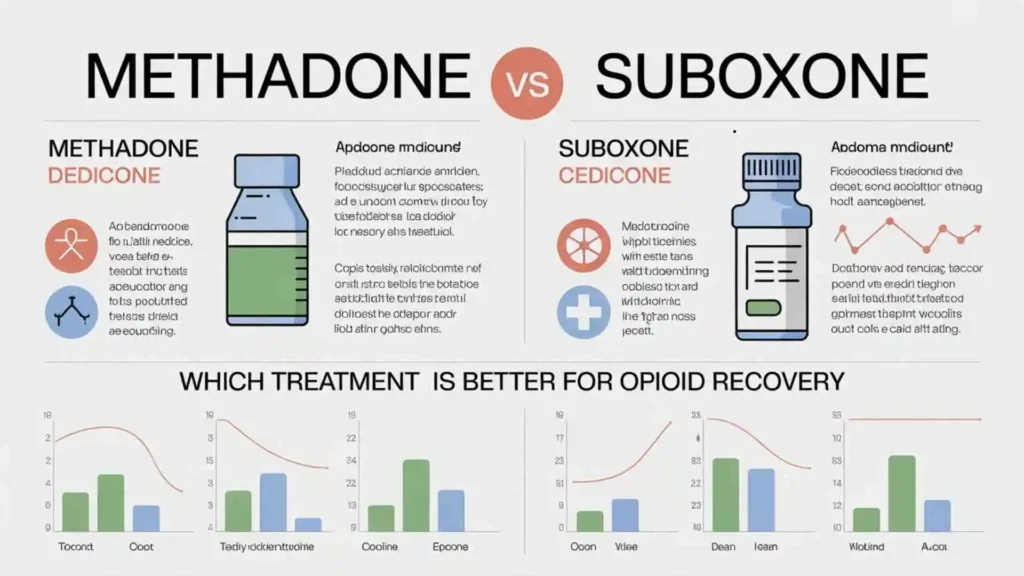
Methadone vs Suboxone — Quick Comparison
| Feature | Methadone | Suboxone |
| Type | Full opioid agonist | Partial agonist |
| Access | Clinic-based | Prescription-based |
| Risk of overdose | Higher | Lower |
| Take-home doses | Limited initially | Common |
| Withdrawal severity | Stronger | Milder |
| Flexibility | Lower | Higher |
How Each Medication Works
Methadone fully activates opioid receptors, preventing withdrawal and cravings but carrying a higher overdose risk.
Suboxone only partially activates these receptors, which helps control cravings while creating a “ceiling effect” that lowers misuse potential.
Both support recovery by stabilizing brain chemistry and reducing relapse risk.
Effectiveness for Opioid Use Disorder
Studies show both methadone and Suboxone are effective when combined with counseling and behavioral therapy.
- Methadone may work better for people with long-term or severe opioid dependence.
- Suboxone is often preferred for those seeking outpatient treatment with fewer clinic visits.
Success depends heavily on consistency, support systems, and personalized care.
Side Effects Comparison
Methadone Common Side Effects
- Drowsiness
- Constipation
- Sweating
- Weight gain
Suboxone Common Side Effects
- Headache
- Nausea
- Insomnia
- Mouth irritation (films)
Addiction Risk and Safety
Methadone carries a higher risk of dependency and overdose, especially if misused.
Suboxone includes naloxone, which discourages injection misuse and lowers overdose risk, making it safer for home treatment.
Both medications must be used exactly as prescribed.
Accessibility and Treatment Structure
This is a major difference in the suboxone vs methadone debate:
- Methadone usually requires daily clinic visits early on.
- Suboxone can often be picked up at a pharmacy and taken at home.
Many people prefer Suboxone for its convenience and privacy.
Cost and Insurance Coverage
Both medications are generally covered by insurance or Medicaid in many regions.
- Methadone clinic programs may include bundled counseling services.
- Suboxone costs vary by provider and pharmacy but generics help reduce price.
Actual costs depend on location and coverage.
Pros and Cons of Methadone vs Suboxone
✅ Methadone Pros
- Very effective for severe addiction
- Structured clinic support
- Long history of use
❌ Methadone Cons
- Daily clinic visits
- Higher overdose risk
- Less flexibility
✅ Suboxone Pros
- Take-home prescriptions
- Lower overdose risk
- More independence
- Easier access
❌ Suboxone Cons
- May not be strong enough for everyone
- Requires doctor certification
Which One Might Be Right for You?
There’s no universal answer.
- Methadone may be better for people with long-term or heavy opioid use who benefit from structured care.
- Suboxone often suits those seeking flexible, outpatient recovery with lower safety risks.
A healthcare provider can help determine the best option based on your history and goals.
✅ Conclusion
When comparing methadone vs Suboxone, both are powerful tools for treating opioid use disorder—but they serve different needs.
Methadone offers intensive, clinic-based support, while Suboxone provides greater freedom and safety for many patients.
Understanding these differences empowers you to make informed decisions and take meaningful steps toward recovery with professional guidance.

James Carter
Hi, I’m James Carter, a passionate language enthusiast and grammar geek. I’ve spent years exploring the nuances of English, helping students and writers improve their writing one rule at a time. Writing isn’t just my profession—it’s my way of making communication clearer and more fun for everyone. When I’m not dissecting sentences or hunting down grammar mysteries, you can find me reading classic literature or experimenting with creative writing. I love sharing tips and tricks that make learning English simple and enjoyable. Through my work, I aim to make grammar approachable, interesting, and never intimidating.
Books by James Carter:
-
Mastering English Grammar: A Complete Guide
-
Writing with Confidence: Grammar Made Easy

