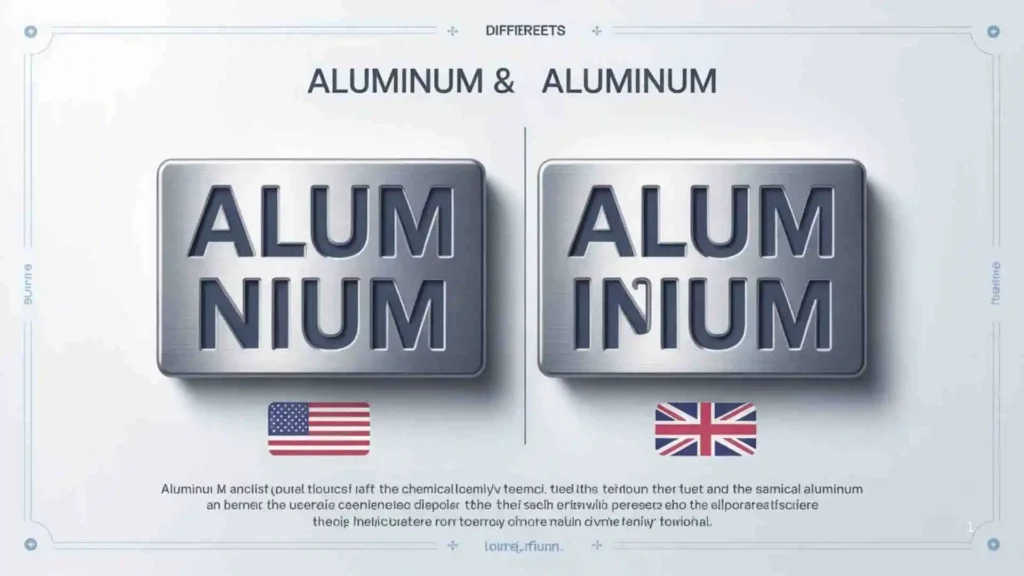
If you’ve ever noticed the words aluminum and aluminium, you may have wondered whether they refer to two different metals. The answer might surprise you — they actually refer to the same chemical element. The difference lies mainly in language and regional spelling preferences.
In countries like the United States, the spelling aluminum is commonly used, while in the United Kingdom and many other parts of the world, aluminium is the standard spelling.
Despite the variation in spelling and pronunciation, both terms refer to the same lightweight and highly versatile metal used in countless industries.
Let’s explore the history behind these two names, why they differ, and how the metal is used today.
What Is Aluminum / Aluminium?
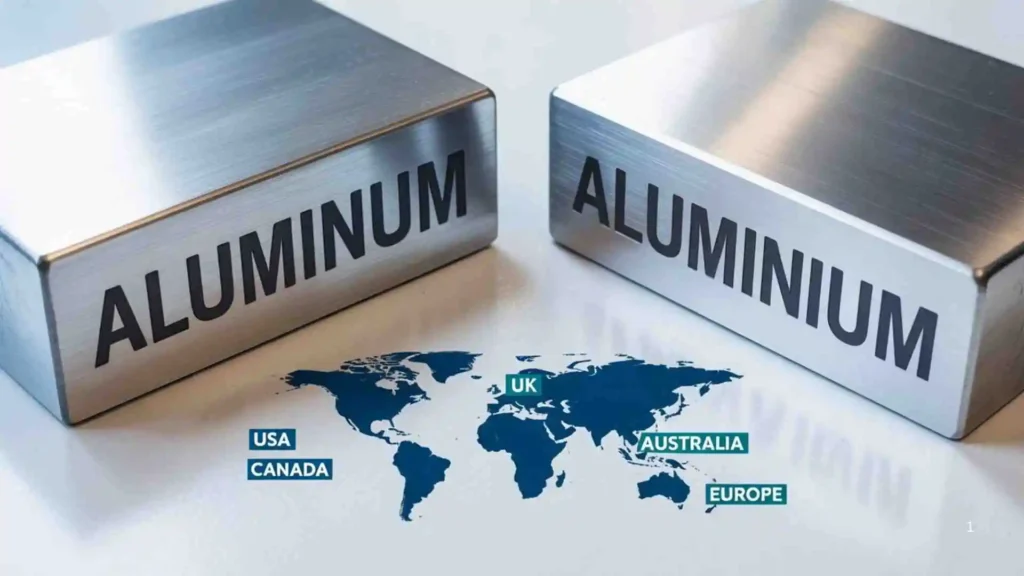
Aluminum (or aluminium) is a chemical element with the symbol Al and atomic number 13. It is a lightweight, corrosion-resistant metal widely used in manufacturing and engineering.
Some key characteristics include:
- Lightweight yet strong
- Excellent corrosion resistance
- High electrical conductivity
- Highly recyclable
Because of these properties, it is one of the most widely used metals in the modern world.
Why Are There Two Spellings?
The two spellings exist mainly because of historical and linguistic differences between American and British English.
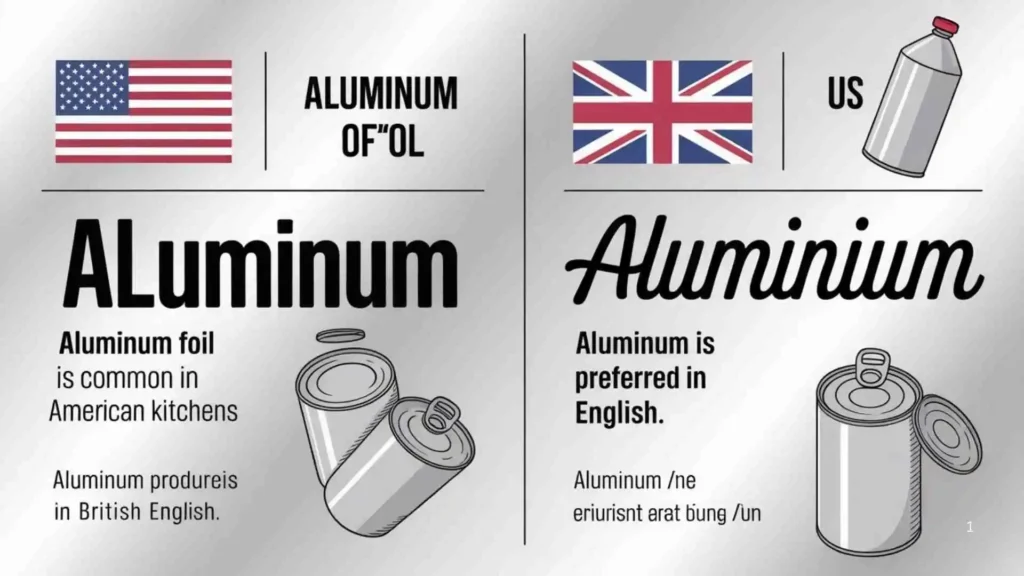
- Aluminum → Preferred in American English
- Aluminium → Preferred in British English and most scientific communities
The naming differences date back to the early 19th century when chemists were still deciding on the standard name for the element.
Origin of the Word
The element was first identified by the British chemist Humphry Davy in the early 1800s.
Initially, the element was called:
- Alumium
- Aluminum
- Aluminium
Over time, the spelling aluminium became popular in Europe because it matched the naming pattern of other elements like sodium, magnesium, and potassium.
Regional Usage
American English
In the United States, aluminum became the preferred spelling. Many American companies and industries adopted this version early on.
British English
In the United Kingdom and most of the world, aluminium remained the standard spelling.
Scientific Usage
The International Union of Pure and Applied Chemistry officially recognizes aluminium as the international standard name for the element.
Are Aluminum and Aluminium the Same Element?
Yes.
There is no chemical or physical difference between aluminum and aluminium. Both terms describe the same element with the symbol Al on the periodic table.
The difference is purely linguistic.
Common Uses of Aluminum / Aluminium
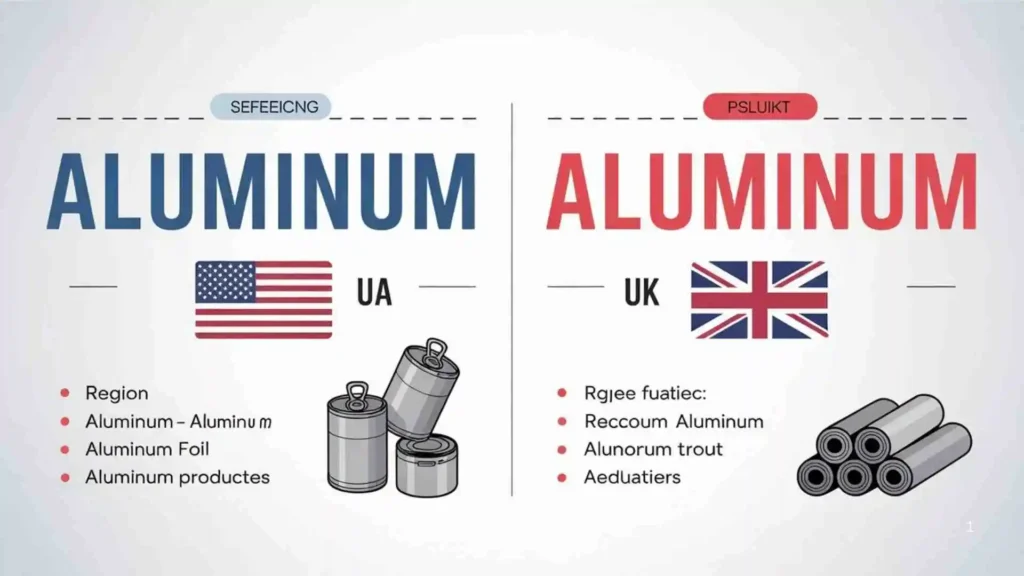
This metal is essential in many industries due to its strength and lightweight nature.
Construction
Used in windows, roofing, structural panels, and building frameworks.
Transportation
Aircraft, cars, trains, and ships use aluminum because it reduces weight and improves fuel efficiency.
Packaging
Aluminum foil and beverage cans are widely used in food packaging.
Electronics
It is used in electrical cables, heat sinks, and electronic components.
Advantages of Aluminum
Some major benefits include:
- Lightweight and durable
- Resistant to rust and corrosion
- Excellent heat and electrical conductivity
- Environmentally friendly because it is highly recyclable
These advantages make aluminum one of the most important materials in modern manufacturing.
FAQs
Is aluminum the same as aluminium?
Yes, both refer to the same chemical element with the symbol Al.
Why do Americans say aluminum?
American English adopted the shorter spelling aluminum in the early 19th century.
Which spelling is correct?
Both are correct depending on regional usage, though aluminium is the international scientific standard.
Conclusion
The debate between aluminum vs aluminium is not about two different metals but simply about spelling and pronunciation.
Aluminum is the American English version, while aluminium is used in British English and international scientific communities.
Regardless of the spelling, the metal itself remains the same a lightweight, durable, and incredibly versatile material that plays a vital role in modern industries around the world.
Also Check These Posts
- Sabalenka vs Keys Head-to-Head Stats Playing Styles & Match Prediction for 2026
- Morocco vs Zambia Preview Head-to-Head Lineups & Match Prediction in 2026

Daniel Brooks
Daniel Brooks is a passionate writer and grammar enthusiast who has spent years exploring the nuances of the English language. Ever since childhood, he has been fascinated by how words shape thoughts and communication. Daniel loves breaking down complex grammar rules into simple, easy-to-understand tips that anyone can apply. His mission is to help learners, writers, and students gain confidence in their writing skills. When he’s not writing, he enjoys reading classic literature and experimenting with creative writing. Daniel believes that mastering grammar is not just about rules, but about expressing yourself clearly and effectively.
Books by Daniel Brooks:
-
The Grammar Guide: Master English with Ease
-
Writing Made Simple: Tips for Clear Communication