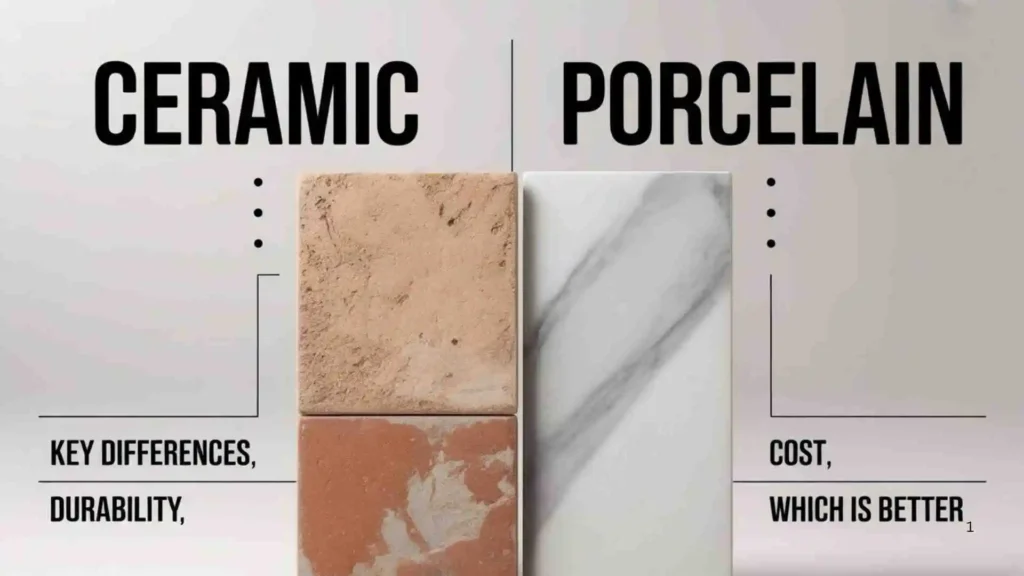
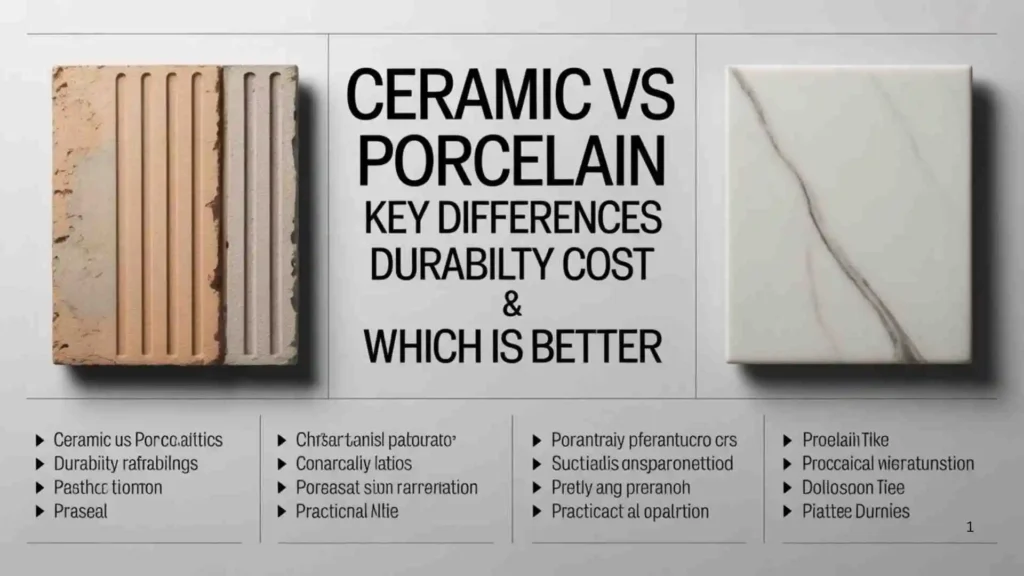
When comparing ceramic vs porcelain, many homeowners wonder which material is the better choice for flooring, tiles, or home design.
While both materials look similar, they have important differences that affect durability, cost, and usage.
Ceramic is widely used for everyday applications, while Porcelain is stronger and more resistant to water. Understanding these differences can help you choose the right option for your needs.
What Is Ceramic?
Ceramic is a clay-based material that is shaped and fired at lower temperatures.
Key Features:
- Affordable and widely available
- Easier to cut and install
- Suitable for indoor use
- Comes in many designs
It is commonly used for walls, backsplashes, and light-traffic areas.
What Is Porcelain?
Porcelain is a refined type of ceramic made from denser clay and fired at higher temperatures.
Key Features:
- Highly durable
- Water-resistant
- Suitable for indoor and outdoor use
- Long-lasting
It is often used in high-traffic areas and outdoor spaces.
Ceramic vs Porcelain: Key Differences Explained
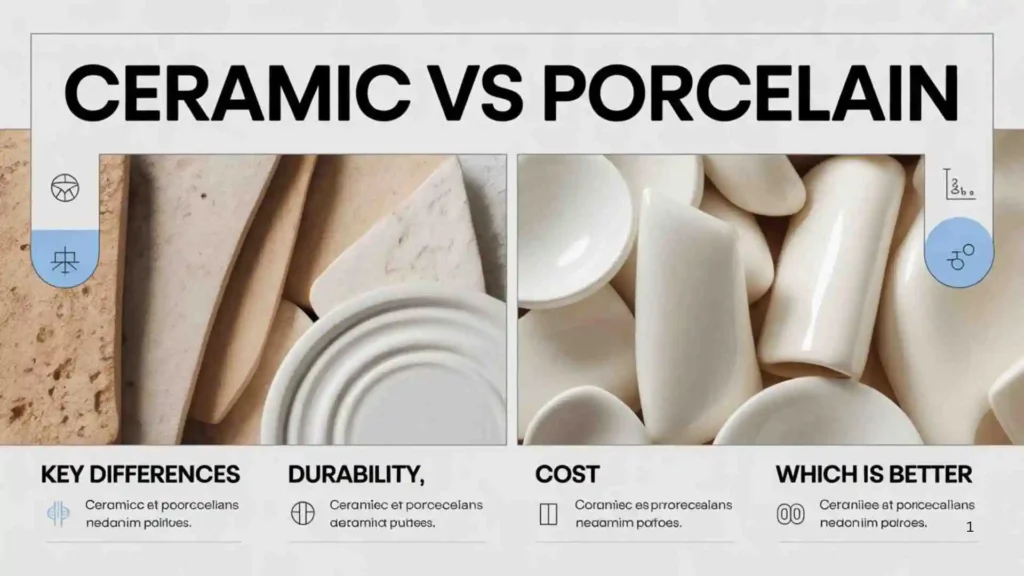
Durability
- Ceramic: Less durable
- Porcelain: Highly durable and strong
Water Resistance
- Ceramic: More porous
- Porcelain: Less porous and more water-resistant
Cost
- Ceramic: More affordable
- Porcelain: More expensive
Appearance
Both materials come in a variety of styles, but porcelain often has a more refined finish.
Pros and Cons of Ceramic

Pros
- Budget-friendly
- Easy installation
- Wide variety of designs
Cons
- Less durable
- Not ideal for heavy traffic
Pros and Cons of Porcelain
Pros
- Strong and durable
- Water-resistant
- Long lifespan
Cons
- Higher cost
- Harder to install
Best Uses: Ceramic vs Porcelain
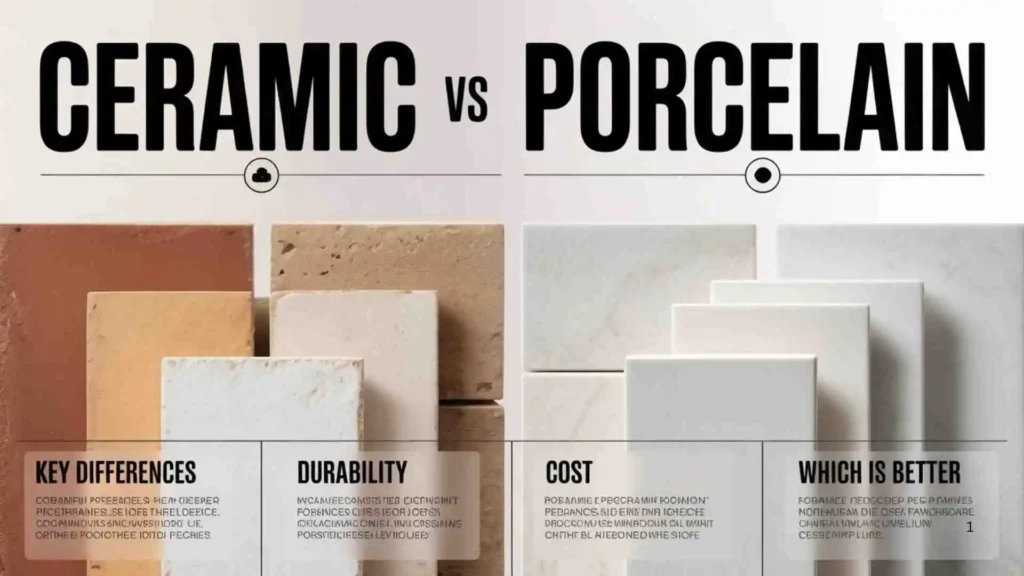
Ceramic:
- Walls
- Decorative areas
- Low-traffic floors
Porcelain:
- Bathrooms
- Kitchens
- Outdoor flooring
Which Is Better for Your Home?
Choose ceramic if:
- You are on a budget
- You need tiles for low-traffic areas
Choose porcelain if:
- You need durability
- You want water-resistant flooring
Your choice depends on usage, budget, and design preferences.
Ceramic vs Porcelain Comparison Table
| Feature | Ceramic | Porcelain |
| Durability | Moderate | High |
| Water Resistance | Low | High |
| Cost | Lower | Higher |
| Best Use | Indoor | Indoor & outdoor |
FAQs
Is porcelain better than ceramic?
Porcelain is more durable and water-resistant, making it better for heavy use.
Can ceramic tiles be used in bathrooms?
Yes, but porcelain is usually a better choice due to water resistance.
Why is porcelain more expensive?
It is made from denser materials and fired at higher temperatures.
Which lasts longer?
Porcelain generally lasts longer due to its strength.
Is ceramic easier to install?
Yes, ceramic is easier to cut and install compared to porcelain.
Conclusion
The ceramic vs porcelain comparison shows that both materials have their advantages.
Ceramic is affordable and suitable for light use, while porcelain offers superior durability and water resistance.
Choosing the right material depends on your budget, location, and long-term needs. With the right choice, you can enhance both the beauty and functionality of your space.
Also Check These Posts
- Miami vs Cincinnati | Match Preview Stats & Prediction for 2026
- Batman vs Yakuza Who Would Win in a Realistic Showdown for 2026

Emma Johnson
Hi! I’m Emma Johnson, a passionate writer and grammar enthusiast who loves exploring the magic of words. For as long as I can remember, I’ve been fascinated by how language shapes ideas and connects people. Through my writing, I aim to make grammar simple, fun, and accessible for everyone. I enjoy sharing tips, tricks, and little-known rules that help readers improve their writing confidently. When I’m not writing, you’ll usually find me reading classic novels, journaling, or sipping coffee while brainstorming new ideas. Writing is not just my profession—it’s my way of inspiring others to express themselves clearly and creatively.
Books by Emma Johnson:
-
Grammar Made Simple
-
Mastering English Essentials