
Sexually transmitted infections (STIs) are more common than many people realize, and two of the most frequently diagnosed are Chlamydia and Gonorrhea.
While they share similarities in how they spread and are treated, they also have important differences in symptoms, complications, and diagnosis.
In this guide, we’ll break down chlamydia vs gonorrhea in simple, clear terms to help you understand the signs, risks, and treatment options.
What Is Chlamydia?

Chlamydia is a bacterial infection caused by Chlamydia trachomatis.
- Spread through vaginal, anal, or oral sex
- Often called a “silent infection” because many people have no symptoms
- Can affect both men and women
What Is Gonorrhea?
Gonorrhea is caused by the bacterium Neisseria gonorrhoeae.
- Also spread through sexual contact
- More likely to cause noticeable symptoms than chlamydia
- Can infect the genitals, rectum, and throat
Key Differences Between Chlamydia and Gonorrhea
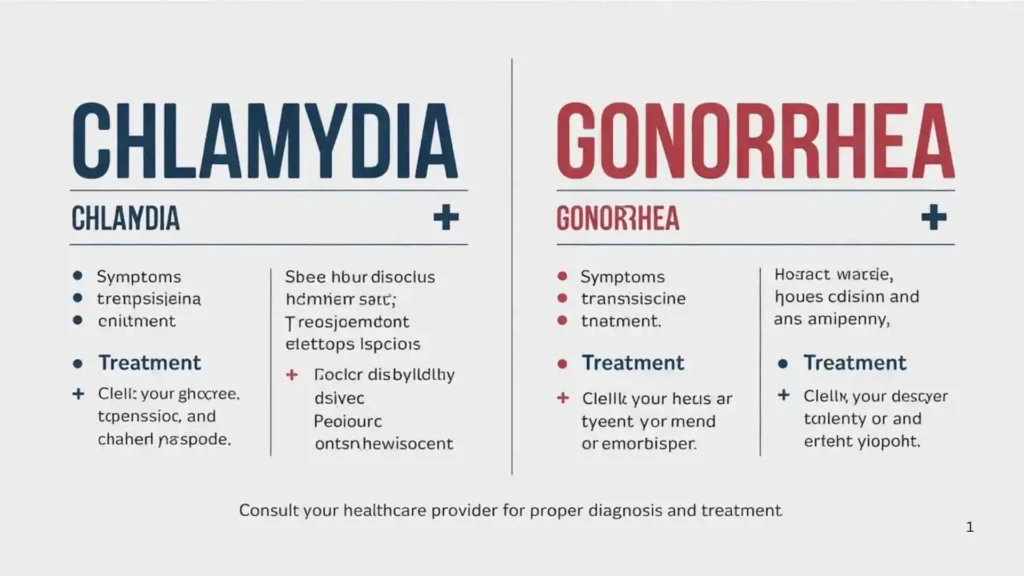
| Feature | Chlamydia | Gonorrhea |
| Symptoms | Often mild or none | More noticeable |
| Discharge | Clear or light | Thick, yellow/green |
| Pain | Mild | More intense |
| Complications | Serious if untreated | Can progress faster |
Symptoms Comparison
In Women
- Chlamydia: Mild discharge, burning urination, often no symptoms
- Gonorrhea: Increased discharge, pelvic pain, bleeding between periods
In Men
- Chlamydia: Discharge, burning sensation, testicular pain
- Gonorrhea: Strong discharge, painful urination, swelling
Asymptomatic Cases
Both infections can be asymptomatic, which is why regular testing is important.
Causes and Transmission
Both infections spread through:
- Unprotected sexual contact
- Sharing sex toys
- From mother to baby during childbirth
Using protection significantly reduces risk.
Testing and Diagnosis
- Urine tests
- Swab tests (genital, throat, rectum)
Testing is quick, simple, and essential if exposure is suspected.
Treatment Options
Both infections are treatable with antibiotics.
- Chlamydia: Typically treated with oral antibiotics
- Gonorrhea: Often requires an antibiotic injection plus oral medication
Early treatment leads to full recovery in most cases.
Complications if Untreated

If left untreated, both can lead to:
- Pelvic inflammatory disease (PID)
- Infertility
- Chronic pain
- Increased risk of other infections
Gonorrhea may also develop antibiotic resistance if not properly treated.
Prevention Tips
- Use condoms consistently
- Get regular STI testing
- Limit number of sexual partners
- Communicate openly with partners
Which Is Worse?
Neither is “better” or “worse”—both are serious if untreated.
- Chlamydia: More common and often silent
- Gonorrhea: More aggressive symptoms and faster progression
The key is early detection and treatment.
FAQs
Can you have both at the same time?
Yes, co-infection is possible.
Are they curable?
Yes, both are curable with proper treatment.
How soon do symptoms appear?
Symptoms may appear within days to weeks—or not at all.
Conclusion
When comparing chlamydia vs gonorrhea, both infections share similarities in transmission and treatment but differ in symptoms and progression.
Chlamydia is often silent and harder to detect, while gonorrhea tends to cause more noticeable symptoms.
Regardless of the differences, both conditions are serious if left untreated but are fully curable with early diagnosis and proper care.
Staying informed, practicing safe habits, and getting regular testing are the best ways to protect your health.
Also Check These Posts
- Ceramic vs Porcelain Key Differences Durability Cost & Which Is Better in 2026
- Grêmio vs Palmeiras Stats Head-to-Head Key Players & Match Prediction in 2026

James Carter
Hi, I’m James Carter, a passionate language enthusiast and grammar geek. I’ve spent years exploring the nuances of English, helping students and writers improve their writing one rule at a time. Writing isn’t just my profession—it’s my way of making communication clearer and more fun for everyone. When I’m not dissecting sentences or hunting down grammar mysteries, you can find me reading classic literature or experimenting with creative writing. I love sharing tips and tricks that make learning English simple and enjoyable. Through my work, I aim to make grammar approachable, interesting, and never intimidating.
Books by James Carter:
-
Mastering English Grammar: A Complete Guide
-
Writing with Confidence: Grammar Made Easy