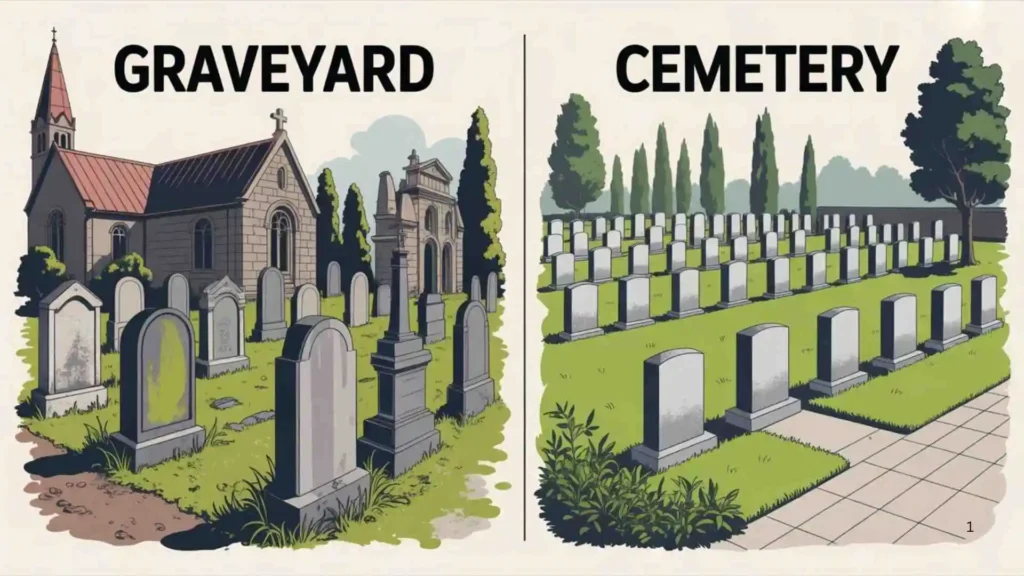
Many people use the terms graveyard vs cemetery interchangeably, but they actually have different meanings.
While both refer to places where people are buried, their origins, usage, and cultural significance are not the same.
Understanding the difference between a graveyard and a cemetery can help you use the correct term in the right context.
This topic is not only about language but also about history and tradition. Over time, these burial grounds have evolved in design and purpose. Let’s explore what sets them apart and why the distinction matters.
What Is a Graveyard?
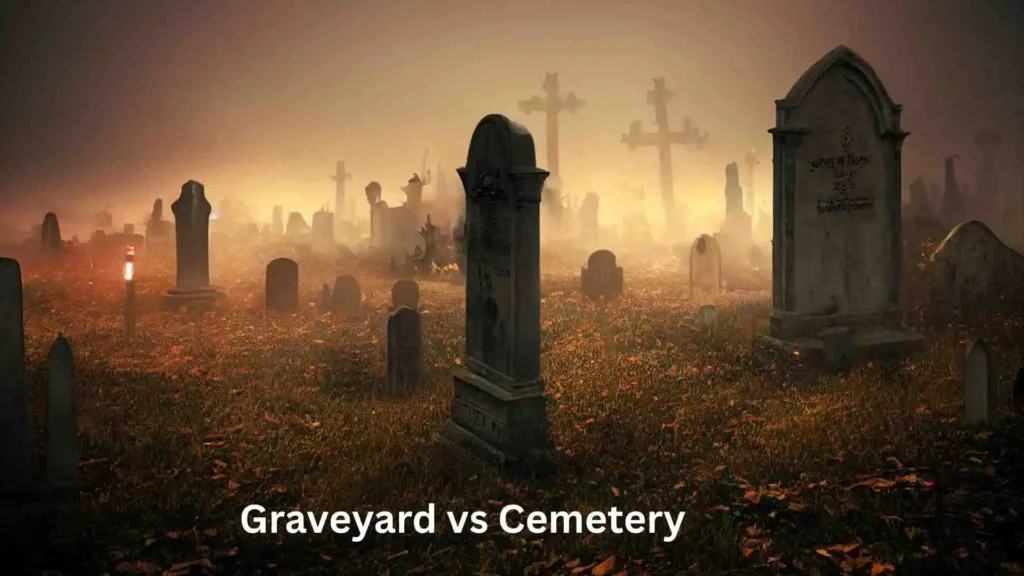
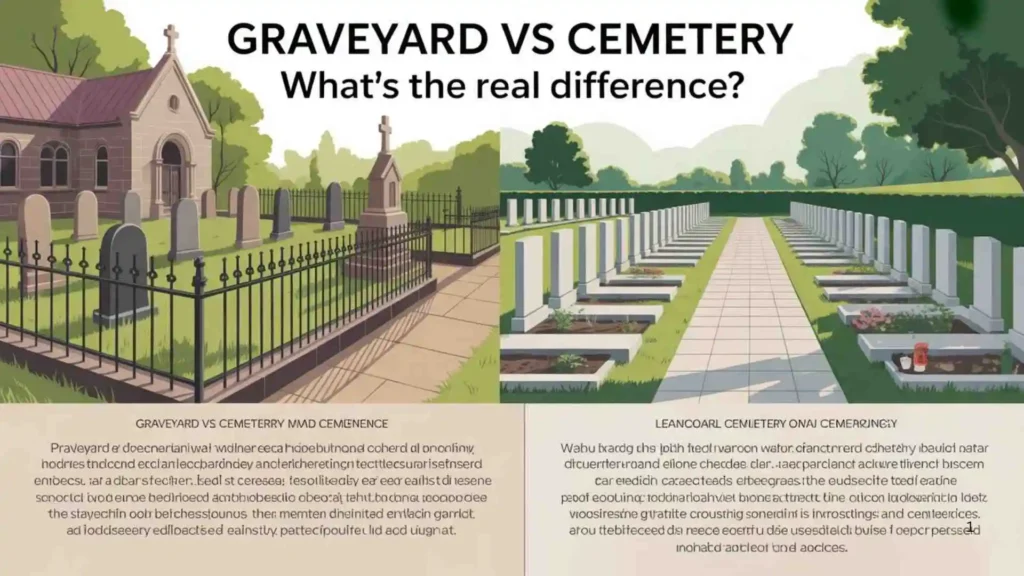
A graveyard is traditionally a burial ground located next to or within a church.
Key features include:
- Connected to a church
- Smaller in size
- Often older and historically significant
Graveyards were commonly used in earlier centuries when churches managed burial practices.
What Is a Cemetery?
A cemetery is a larger, organized burial ground that is not necessarily linked to a church.
Key features include:
- Independent from religious institutions
- More structured layout
- Designed for long-term planning
Cemeteries became popular as cities grew and required more organized burial spaces.
Graveyard vs Cemetery: Key Differences Explained
Location
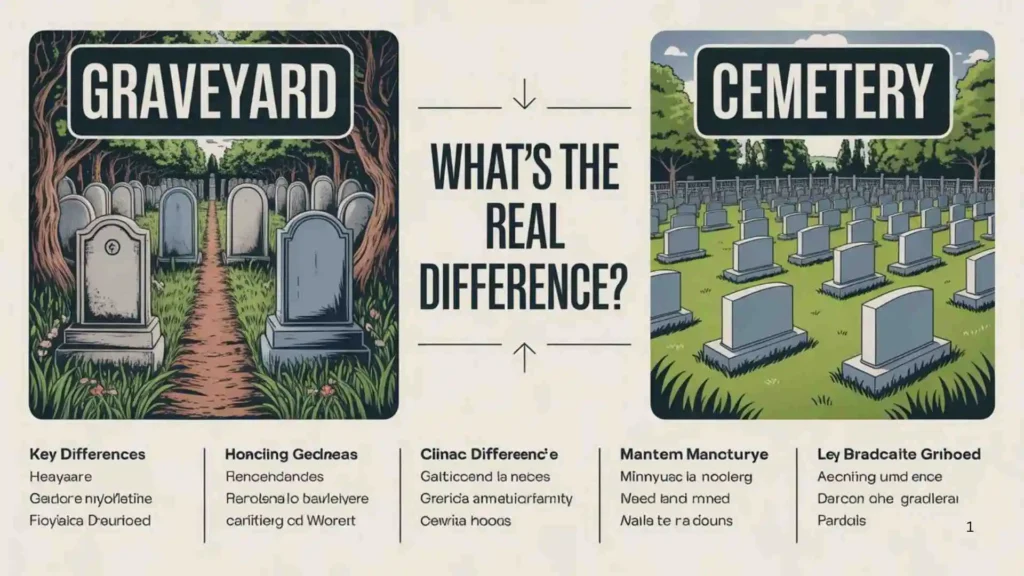
Graveyards are usually located near churches, while cemeteries can be found anywhere, often outside city centers.
Religious Connection
Graveyards are closely tied to religious institutions, whereas cemeteries may be secular or serve multiple religions.
Size and Organization
Graveyards are typically smaller and less organized. Cemeteries are larger with planned layouts and sections.
Modern Usage
Today, the word “cemetery” is more commonly used, while “graveyard” is often used in a historical or informal sense.
Historical Origins of Graveyards and Cemeteries
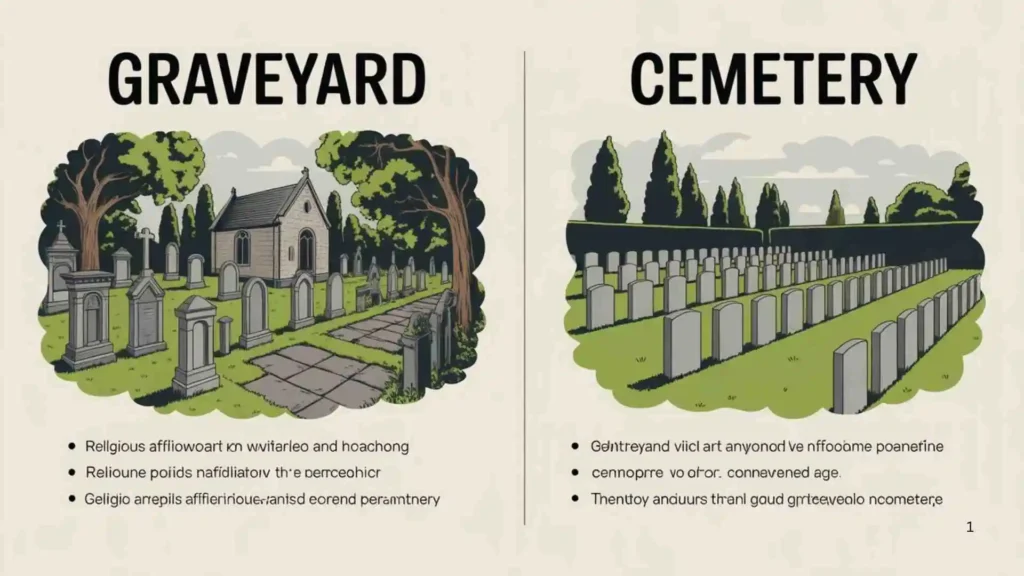
Graveyards date back to early Christian traditions when people were buried near churches. Over time, space limitations and health concerns led to the creation of cemeteries.
The term “cemetery” comes from a word meaning “sleeping place,” reflecting a more peaceful and organized approach to burial.
Cultural and Religious Significance
Both graveyards and cemeteries hold deep cultural and emotional value.
They serve as places to:
- Honor loved ones
- Reflect on life and memory
- Practice religious or cultural rituals
Different cultures may have unique traditions related to burial grounds.
Graveyard vs Cemetery Comparison Table
| Feature | Graveyard | Cemetery |
| Location | Near church | Anywhere |
| Religious Link | Strong | Optional |
| Size | Smaller | Larger |
| Organization | Less structured | Well-planned |
Common Misconceptions
Many people think graveyards and cemeteries are exactly the same. While they are similar, the main difference lies in location and religious connection.
Another misconception is that all burial grounds are called graveyards, but modern usage favors the term cemetery.
FAQs
Is a graveyard the same as a cemetery?
No, a graveyard is usually connected to a church, while a cemetery is a larger, independent burial ground.
Why are cemeteries not near churches?
As populations grew, cemeteries were built outside crowded areas for space and health reasons.
Which term is more commonly used today?
“Cemetery” is more commonly used in modern language.
Are all graveyards old?
Most graveyards are older because they were used in earlier times, but some may still be in use today.
Can a cemetery be religious?
Yes, some cemeteries are religious, while others are non-religious or serve multiple faiths.
Conclusion
Understanding graveyard vs cemetery helps clarify an often-confused topic. While both are places of burial, their differences lie in location, history, and purpose.
Graveyards are closely tied to churches and tradition, while cemeteries reflect modern planning and broader use.
Knowing the distinction not only improves your vocabulary but also deepens your understanding of cultural and historical practices.
Also Check These Posts
- CD vs HYSA Which Savings Option Is Better for You in 2026
- Novel vs Book What’s the Real Literary Difference for 2026 📖

Daniel Brooks
Daniel Brooks is a passionate writer and grammar enthusiast who has spent years exploring the nuances of the English language. Ever since childhood, he has been fascinated by how words shape thoughts and communication. Daniel loves breaking down complex grammar rules into simple, easy-to-understand tips that anyone can apply. His mission is to help learners, writers, and students gain confidence in their writing skills. When he’s not writing, he enjoys reading classic literature and experimenting with creative writing. Daniel believes that mastering grammar is not just about rules, but about expressing yourself clearly and effectively.
Books by Daniel Brooks:
-
The Grammar Guide: Master English with Ease
-
Writing Made Simple: Tips for Clear Communication