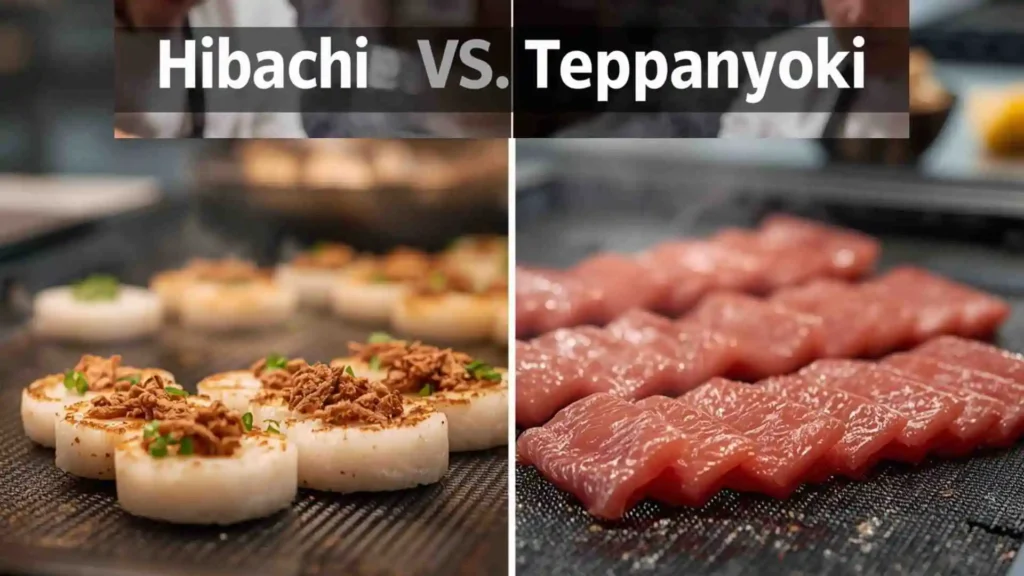
If you’ve ever dined at a Japanese-style restaurant, you’ve probably heard the terms Hibachi and Teppanyaki used interchangeably.
But are they really the same thing? While both involve cooking in front of diners, they differ in technique, equipment, and cultural roots.
In this guide, we’ll break down hibachi vs teppanyaki in simple terms so you can clearly understand what sets them apart—and which one you might prefer.
What Is Hibachi?
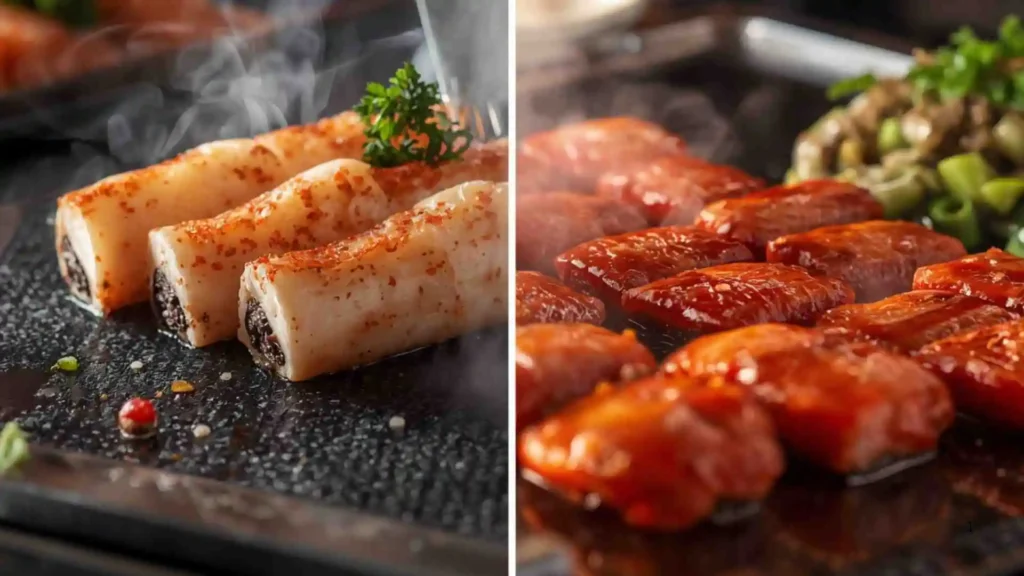
Traditionally, hibachi refers to a small, portable charcoal grill used in Japan.
- Uses an open flame
- Typically cooks simple foods like meat, fish, and vegetables
- Focuses more on flavor than performance
In authentic Japanese culture, hibachi is about minimalism and direct heat cooking.
What Is Teppanyaki?
Teppanyaki comes from the words:
- “Teppan” = iron plate
- “Yaki” = grilled or cooked
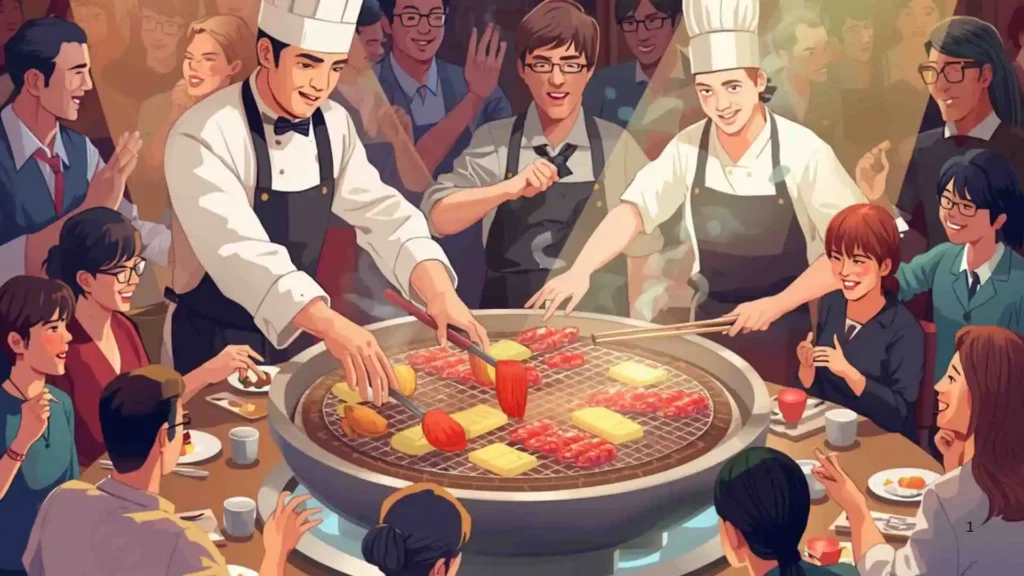
It uses a flat iron griddle, and it’s the style you often see in restaurants where chefs cook in front of guests.
- No open flame
- Large cooking surface
- Known for entertainment and chef performance
Key Differences Between Hibachi and Teppanyaki
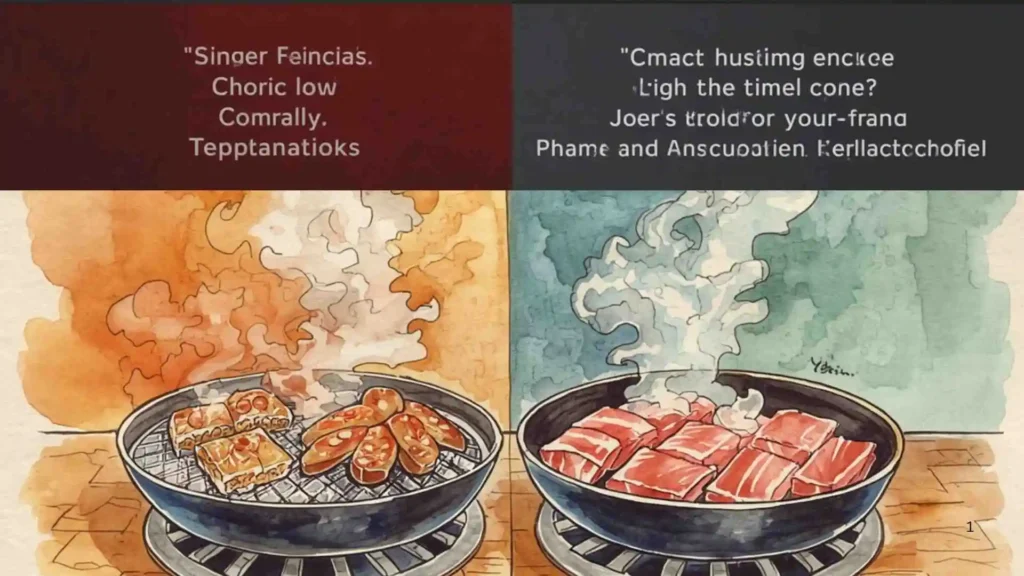
| Feature | Hibachi | Teppanyaki |
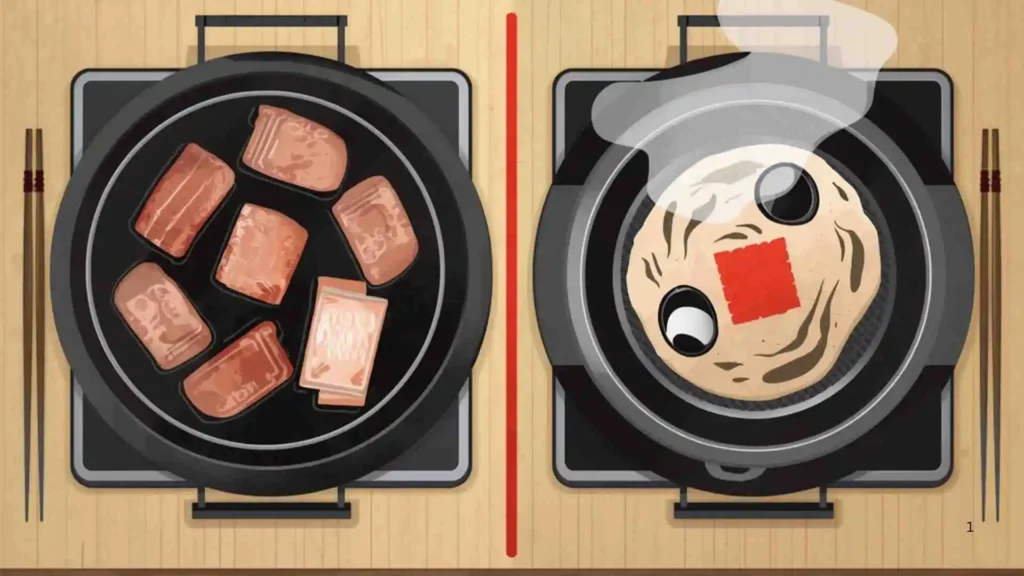
| Cooking surface | Charcoal grill | Flat iron griddle |
| Heat source | Open flame | Electric/gas |
| Style | Traditional | Modern restaurant |
| Experience | Simple | Interactive & entertaining |
Cooking Techniques Explained
- Hibachi: Uses direct heat from charcoal, giving food a smoky flavor
- Teppanyaki: Uses a flat grill, allowing chefs to cook multiple ingredients evenly
Teppanyaki also enables techniques like:
- Flipping utensils
- Creating onion volcanoes
- Fast-paced cooking tricks
Dining Experience
- Hibachi: Quiet, traditional, and focused on food
- Teppanyaki: Social, lively, and performance-driven
Most Western “hibachi restaurants” are actually serving teppanyaki-style cooking.
Food and Menu Differences
Hibachi
- Grilled meat and seafood
- Simple seasoning
- Minimal sauces
Teppanyaki
- Steak, chicken, shrimp
- Fried rice and noodles
- Rich sauces and butter
Cultural Origins and Authenticity
- Hibachi is more traditional and authentic
- Teppanyaki is a modern adaptation, popularized for entertainment
Understanding this helps clear up the common confusion between the two.
Which One Is Better?
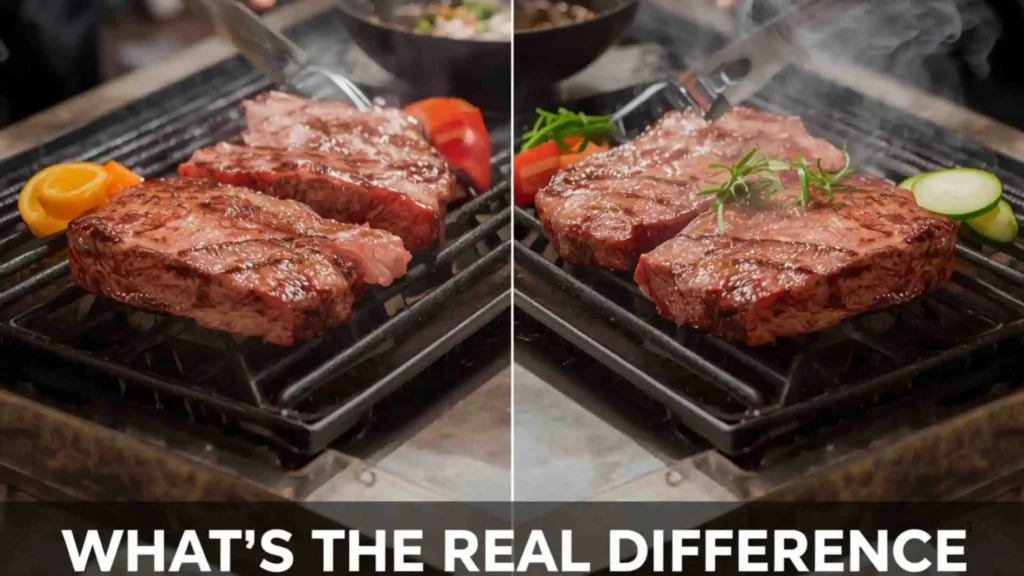
It depends on what you’re looking for:
- Choose hibachi for authentic, smoky flavors
- Choose teppanyaki for a fun, interactive dining experience
Pros and Cons of Hibachi
Pros
- Authentic Japanese cooking
- Rich, smoky flavor
- Simple and natural
Cons
- Limited variety
- Less interactive
Pros and Cons of Teppanyaki
Pros
- Entertaining dining experience
- Wide variety of dishes
- Great for groups
Cons
- Less traditional
- Can be more expensive
FAQs
Is hibachi the same as teppanyaki?
No, hibachi uses a charcoal grill, while teppanyaki uses a flat iron griddle.
Why do restaurants call it hibachi?
In many Western countries, “hibachi” is used incorrectly to describe teppanyaki-style cooking.
Which tastes better?
Hibachi offers a smoky flavor, while teppanyaki provides richer, buttery dishes.
Conclusion
When comparing hibachi vs teppanyaki, the key differences come down to cooking style, equipment, and overall experience.
Hibachi represents traditional Japanese grilling with simple, smoky flavours, while teppanyaki offers a modern, entertaining approach with a wider variety of dishes.
If you prefer authenticity or excitement, both styles deliver a unique and delicious experience worth trying.
Also Check These Posts
- I vs Me Simple Rules Examples & How to Use Them Correctly in 2026
- Boat vs Ship Key Differences Size Uses & Simple Explanation for 2026

James Carter
Hi, I’m James Carter, a passionate language enthusiast and grammar geek. I’ve spent years exploring the nuances of English, helping students and writers improve their writing one rule at a time. Writing isn’t just my profession—it’s my way of making communication clearer and more fun for everyone. When I’m not dissecting sentences or hunting down grammar mysteries, you can find me reading classic literature or experimenting with creative writing. I love sharing tips and tricks that make learning English simple and enjoyable. Through my work, I aim to make grammar approachable, interesting, and never intimidating.
Books by James Carter:
-
Mastering English Grammar: A Complete Guide
-
Writing with Confidence: Grammar Made Easy