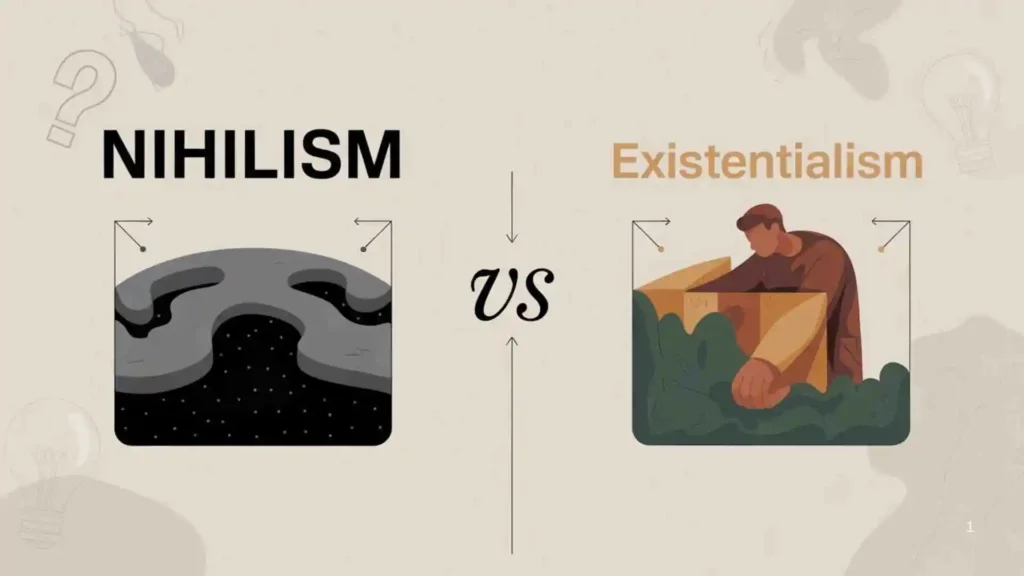
The debate between nihilism vs existentialism explores one of the most profound questions in philosophy: does life have inherent meaning? While both philosophies examine the nature of existence and human purpose, they approach the question in very different ways.
Nihilism often suggests that life has no objective meaning or value, while existentialism argues that individuals can create their own meaning through choices and actions.
These ideas developed within the broader field of Philosophy and have influenced literature, psychology, and modern thought.
Understanding these philosophies can help us explore how people interpret purpose, freedom, and responsibility in life.
What Is Nihilism?
Nihilism is a philosophical belief that life has no inherent meaning, purpose, or objective value.
Supporters of nihilism argue that:
- Moral values are human constructions
- Life lacks universal meaning
- Traditional beliefs about truth and purpose may be illusions
The philosophy became widely discussed through the writings of Friedrich Nietzsche, although Nietzsche himself critiqued nihilism rather than promoting it directly.
In its extreme form, nihilism can lead to a belief that nothing truly matters.
What Is Existentialism?
Existentialism takes a different approach. Instead of claiming life has no meaning, existentialists argue that meaning is not given — it must be created by individuals.
Important thinkers such as Jean‑Paul Sartre and Albert Camus emphasized personal freedom and responsibility.
Core ideas of existentialism include:
- Humans are free to choose their path
- Meaning is created through actions
- Personal responsibility defines existence
In this philosophy, life may not have inherent meaning, but individuals can give it meaning through their choices.
Historical Origins of Both Philosophies
Nihilism and existentialism emerged primarily during the 19th and 20th centuries.
During this period, many intellectuals began questioning traditional religious and moral structures. Rapid social change, scientific progress, and political upheaval encouraged philosophers to rethink the foundations of meaning and existence.
These ideas became particularly influential in European philosophical movements.
Nihilism vs Existentialism – Key Differences
1. View of Meaning
- Nihilism: Life has no inherent meaning.
- Existentialism: Life has no predetermined meaning, but individuals can create their own.
2. View of Morality
- Nihilism: Moral values are meaningless or arbitrary.
- Existentialism: Individuals are responsible for defining their own moral values.
3. Human Freedom
- Nihilism: Freedom may appear meaningless if nothing matters.
- Existentialism: Freedom is essential because it allows individuals to shape their identity.
4. Approach to Life
- Nihilism: Can lead to pessimism or rejection of meaning.
- Existentialism: Encourages personal responsibility and purposeful living.
Similarities Between Nihilism and Existentialism
Despite their differences, the two philosophies share several similarities.
Both:
- Question traditional beliefs about meaning and morality
- Reject the idea that life has a predetermined purpose
- Encourage deep reflection about human existence
Because of these similarities, existentialism is sometimes viewed as a response to nihilism.
Key Philosophers Associated With Each Philosophy
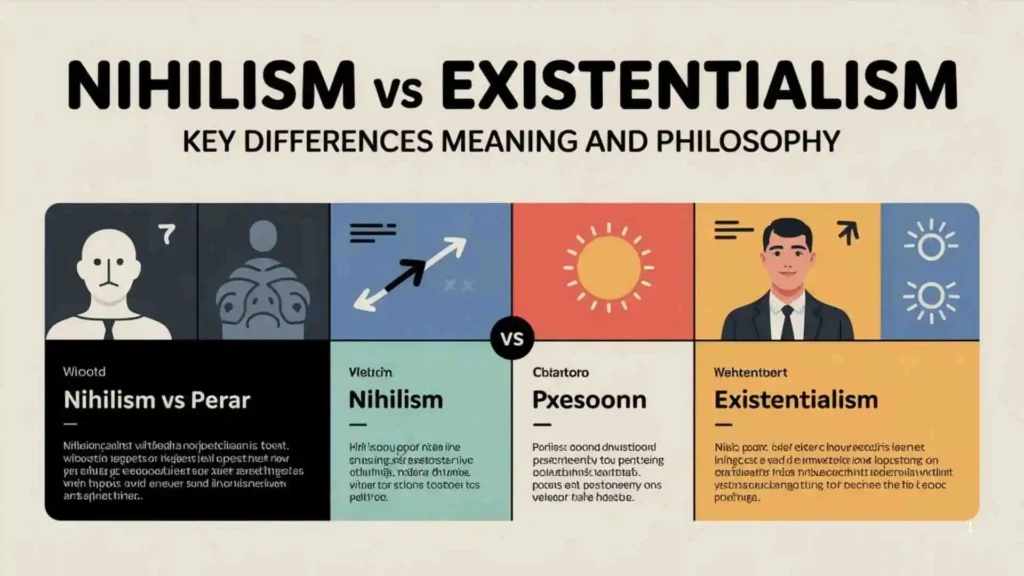
Nihilism
The philosophy is often connected with thinkers such as Friedrich Nietzsche, who warned that society might fall into nihilism after abandoning traditional values.
Existentialism
Important existentialist thinkers include:
- Jean‑Paul Sartre
- Albert Camus
Their works explored themes of freedom, responsibility, and the search for meaning.
Real-Life Applications
These philosophical ideas influence many aspects of modern life, including:
- Literature and art
- Psychology and personal identity
- Discussions about meaning and purpose
For example, existentialism encourages individuals to take responsibility for their decisions and actively shape their lives.
Comparison Table
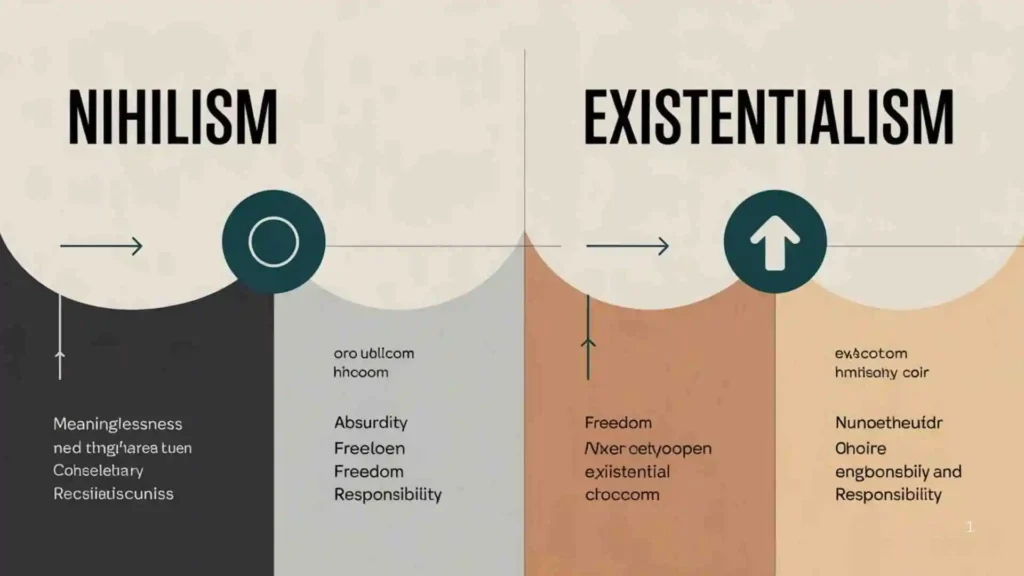
| Aspect | Nihilism | Existentialism |
| Meaning of Life | None | Created by individuals |
| Morality | Often rejected | Defined personally |
| Human Freedom | Often seen as meaningless | Essential for creating meaning |
| Life Perspective | Often pessimistic | Often empowering |
FAQs
Is existentialism the opposite of nihilism?
Not exactly. Existentialism acknowledges the absence of inherent meaning but believes individuals can create their own purpose.
Who created nihilism?
Nihilism developed gradually through philosophical discussions and was strongly associated with the writings of Friedrich Nietzsche.
Is existentialism optimistic?
It can be seen as more optimistic than nihilism because it emphasizes personal freedom and responsibility.
Conclusion
The discussion of nihilism vs existentialism highlights two different responses to the same fundamental question about life’s meaning.
Nihilism suggests that life lacks inherent purpose, while existentialism argues that individuals can create meaning through their choices and actions.
Both philosophies encourage deep reflection about human existence, freedom, and responsibility.
If one finds existentialism empowering or views nihilism as a critique of traditional beliefs, these ideas continue to influence modern philosophy, literature, and personal thought.
Also Check These Posts
- Everton vs Southampton Preview Head-to-Head Lineups & Match Prediction in 2026
- BJ’s vs Costco Which Warehouse Club Offers Better Value for 2026

Sophia Miller
Hi, I’m Sophia Miller, a passionate language enthusiast and grammar lover. Ever since I was a child, I’ve been fascinated by the power of words and how proper grammar can transform communication. I’ve spent years exploring the intricacies of English, from punctuation quirks to sentence structures, and I love helping others master the art of writing clearly and confidently. Writing, teaching, and sharing tips has always been my way of connecting with fellow language lovers. When I’m not analyzing sentences, you’ll find me reading novels or sipping coffee while jotting down new ideas. Grammar isn’t just rules to me—it’s a way to express creativity with precision.
Books by Sophia Miller:
-
Mastering English Grammar Made Easy
-
The Writer’s Guide to Perfect Sentences