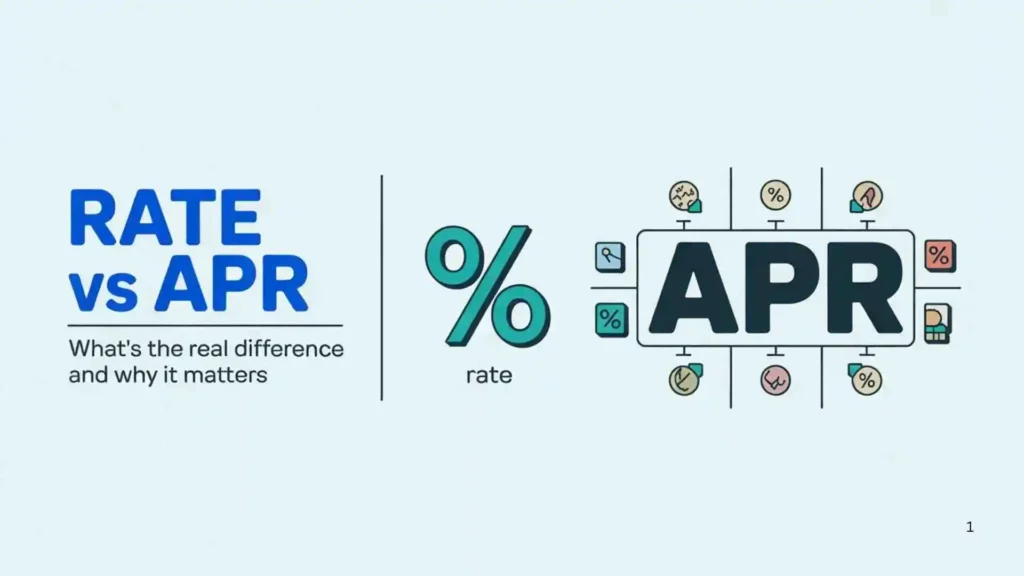
When comparing loans, many people see two numbers: the interest rate and the APR. At first glance, they look similar but they are not the same.
Understanding rate vs APR can save you thousands of dollars over the life of a loan.
If you’re applying for a mortgage, car loan, or personal loan, knowing the difference helps you avoid hidden costs and make smarter financial decisions.
Let’s break it down in simple terms so you can borrow with confidence.
What Is an Interest Rate?
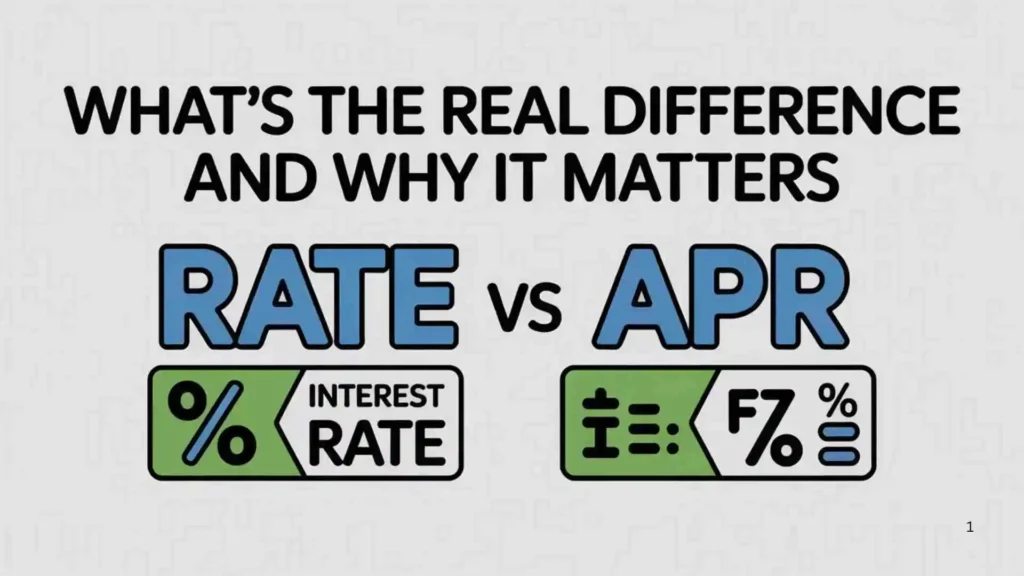
The interest rate is the percentage a lender charges you for borrowing money.
It only reflects:
- The base cost of borrowing
- The percentage applied to your loan balance
- The amount used to calculate your monthly payment
If you borrow $200,000 at a 6% interest rate, you pay 6% annually on the remaining balance.
However, the interest rate does not include additional fees.
What Is APR (Annual Percentage Rate)?
APR stands for Annual Percentage Rate.
APR includes:
- The interest rate
- Loan origination fees
- Closing costs
- Broker fees
- Other lender charges
APR gives you a broader picture of the true cost of borrowing. That’s why APR is usually higher than the interest rate.
Key Differences Between Rate and APR
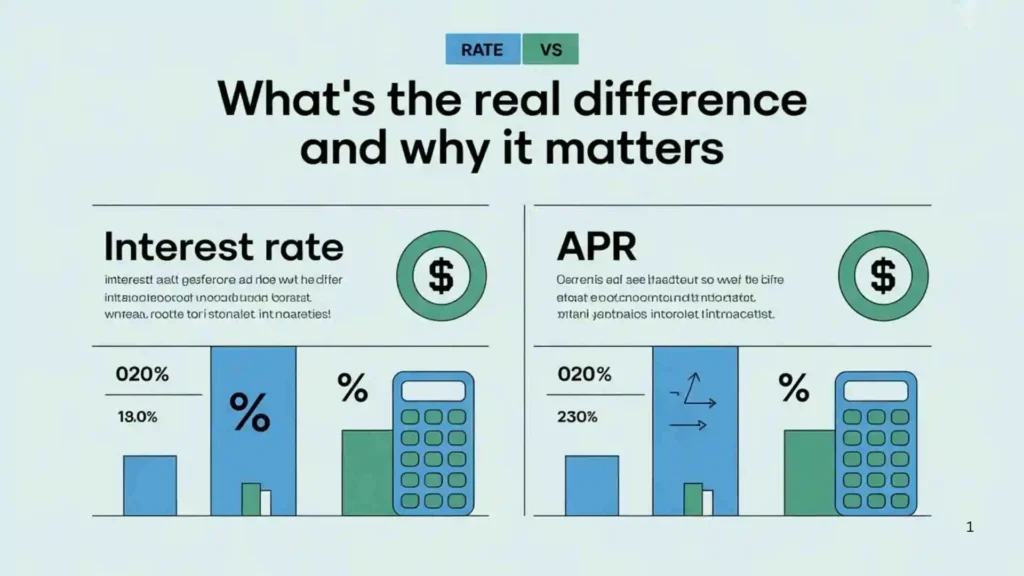
| Interest Rate | APR |
| Base borrowing cost | Total loan cost |
| Lower percentage | Usually higher |
| Excludes fees | Includes fees |
| Affects monthly payment | Affects overall cost |
In simple terms:
- Interest rate = cost to borrow
- APR = total cost of the loan
Why Is APR Usually Higher?
Because APR includes lender fees and additional costs.
For example:
- Interest rate: 6%
- Loan fees: $5,000
- APR may show as 6.4%
Even a small difference in APR can mean thousands more over time.
Rate vs APR in Mortgages
For mortgages, APR becomes extremely important.
Mortgage APR includes:
- Closing costs
- Discount points
- Origination fees
If you’re comparing two mortgage offers, the lower APR usually means the better long-term deal — even if the interest rate looks slightly higher.
Rate vs APR in Auto Loans
Auto loans often have fewer fees, so the difference between rate and APR may be smaller.
Still, always compare APR because:
- Some dealerships add financing fees
- Promotional rates may hide costs
When Should You Focus on Interest Rate?
Focus on the interest rate if:
- You plan to refinance soon
- You will sell the home quickly
- The loan has minimal upfront fees
In short-term borrowing situations, rate can matter more.
When Should You Focus on APR?
Focus on APR if:
- You plan to keep the loan long-term
- You’re comparing multiple lenders
- There are high closing costs
APR gives you the clearest cost comparison.
Common Mistakes Borrowers Make
Many borrowers:
- Only look at the lowest interest rate
- Ignore lender fees
- Don’t compare total loan cost
- Assume lower rate means cheaper loan
This mistake can cost thousands.
How to Compare Loans the Smart Way
Follow these steps:
- Compare APR first
- Review total loan cost
- Check for hidden fees
- Ask about prepayment penalties
- Calculate long-term savings
Smart borrowers always look beyond just the rate.
Conclusion
Understanding rate vs APR is essential before signing any loan agreement. The interest rate shows the base borrowing cost, while APR reveals the true total expense of the loan.
If you plan to keep your loan long-term, APR usually matters more. By comparing both numbers carefully, you can avoid hidden fees, reduce financial stress, and choose the best loan for your situation.
Also Check These Posts
- Kambosos vs Hitchins | Fight Preview Stats & Prediction for 2026🥊
- Batman vs Yakuza Who Would Win in a Realistic Showdown for 2026

James Carter
Hi, I’m James Carter, a passionate language enthusiast and grammar geek. I’ve spent years exploring the nuances of English, helping students and writers improve their writing one rule at a time. Writing isn’t just my profession—it’s my way of making communication clearer and more fun for everyone. When I’m not dissecting sentences or hunting down grammar mysteries, you can find me reading classic literature or experimenting with creative writing. I love sharing tips and tricks that make learning English simple and enjoyable. Through my work, I aim to make grammar approachable, interesting, and never intimidating.
Books by James Carter:
-
Mastering English Grammar: A Complete Guide
-
Writing with Confidence: Grammar Made Easy