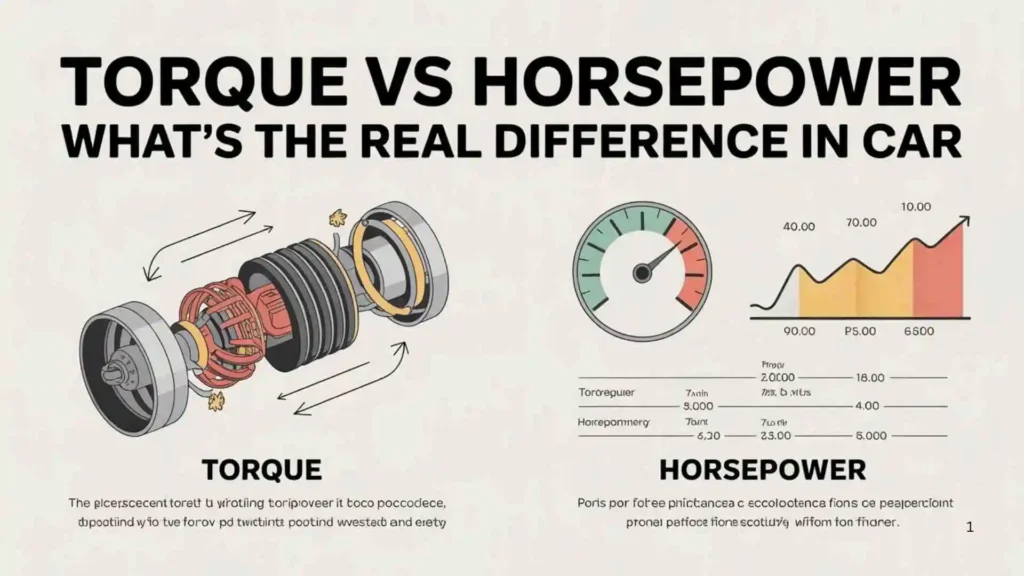
When shopping for a car or comparing engine specs, you often see two numbers: torque and horsepower.
But what do they actually mean? Understanding torque vs horsepower helps you choose the right vehicle for your needs.
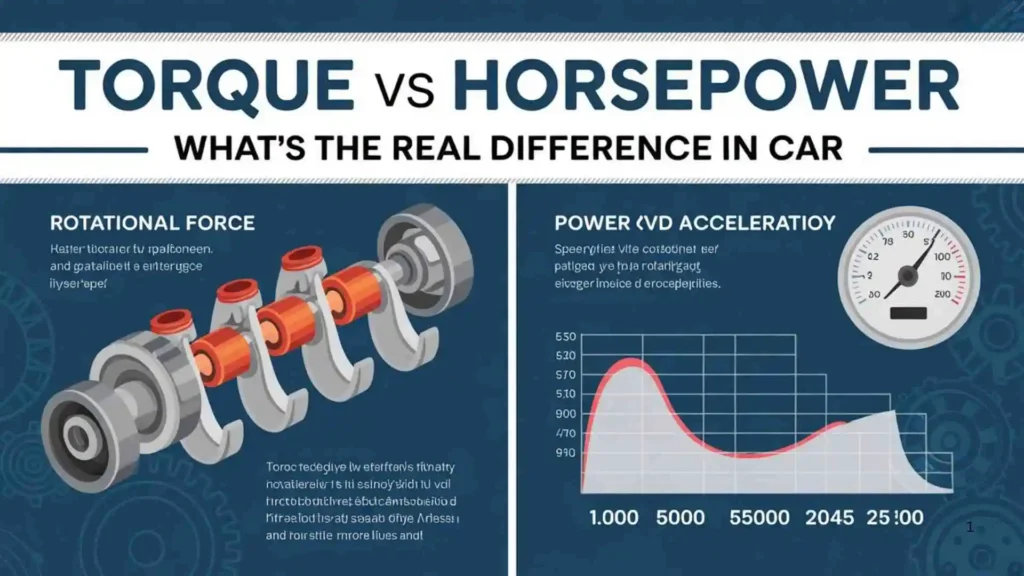
Torque determines how quickly a car accelerates, while horsepower affects how fast it can ultimately go. Both are important, but they serve different purposes.
Let’s break it down in simple terms so you can make smarter decisions when evaluating engine performance.
What Is Torque?
Torque is the rotational force an engine produces. It is measured in pound-feet (lb-ft) or Newton-meters (Nm).
In simple words:
- Torque = twisting force
- It gets your car moving
- It helps with towing and hauling
Vehicles with high torque feel powerful during acceleration, especially at low speeds.
What Is Horsepower?
Horsepower measures how quickly work is done. It reflects the engine’s overall power output.
In simple terms:
- Horsepower = speed potential
- It determines top speed
- It shines at higher RPMs
Sports cars often advertise high horsepower numbers.
Key Differences Between Torque and Horsepower
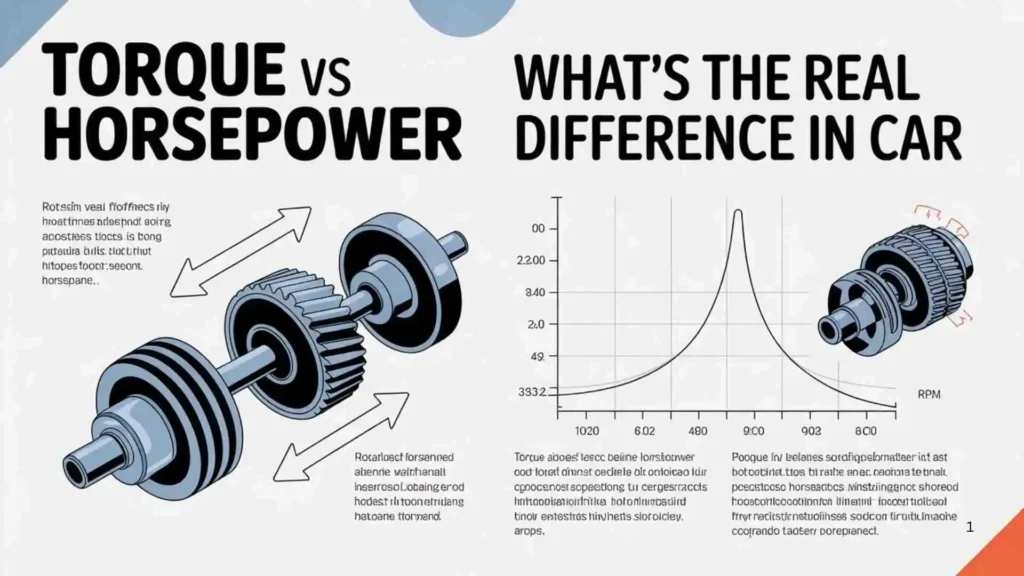
| Torque | Horsepower |
| Rotational force | Overall engine power |
| Measured in lb-ft or Nm | Measured in HP |
| Important for acceleration | Important for top speed |
| Strong at low RPM | Strong at high RPM |
In short:
- Torque moves you
- Horsepower keeps you moving fast
How Torque Affects Acceleration
High torque allows a vehicle to:
- Accelerate quickly from a stop
- Pull heavy loads
- Climb hills easily
Diesel engines typically produce higher torque, making them ideal for trucks.
How Horsepower Affects Top Speed
Higher horsepower allows a car to:
- Reach higher speeds
- Maintain power at high RPM
- Perform better on highways and racetracks
That’s why sports cars emphasize horsepower ratings.
Torque vs Horsepower for Trucks
For trucks and SUVs:
- Torque matters more
- Essential for towing trailers
- Important for off-road capability
Heavy-duty pickup trucks focus on torque numbers.
Torque vs Horsepower for Sports Cars
For sports cars:
- Horsepower plays a bigger role
- Enables high-speed performance
- Enhances track performance
However, balanced torque ensures strong acceleration.
Which Is More Important for Daily Driving?
For normal commuting:
- Balanced torque and horsepower are ideal
- Moderate torque improves city driving
- Adequate horsepower supports highway merging
Most modern cars are engineered for balance.
The Mathematical Relationship
Horsepower and torque are connected by this formula:
Horsepower = (Torque × RPM) ÷ 5252
At 5,252 RPM, torque and horsepower values are equal on a dyno chart.
Common Myths
❌ More horsepower always means faster acceleration
✔ Acceleration depends heavily on torque
❌ Torque doesn’t matter for sports cars
✔ Torque affects launch performance
❌ Diesel engines are slow
✔ Diesel engines produce high torque but lower top speed
Final Verdict
The torque vs horsepower debate isn’t about which is better it’s about which fits your needs.
Torque gives you pulling power and strong acceleration, while horsepower determines how fast your vehicle can ultimately go.
Trucks benefit more from torque, while sports cars thrive on horsepower. For everyday driving, a balanced combination of both delivers the best performance.
Conclusion
Understanding torque vs horsepower helps you decode engine specs confidently.
Torque delivers the initial force to move your car, while horsepower sustains speed and high-performance driving.
When buying a vehicle, think about how you’ll use it towing, racing, or commuting and choose accordingly. Smart car buyers always look beyond just one number.
Also Check These Posts
- Wix vs Shopify Which E Commerce Platform Is Better in 2026
- Batman vs Yakuza Who Would Win in a Realistic Showdown for 2026

James Carter
Hi, I’m James Carter, a passionate language enthusiast and grammar geek. I’ve spent years exploring the nuances of English, helping students and writers improve their writing one rule at a time. Writing isn’t just my profession—it’s my way of making communication clearer and more fun for everyone. When I’m not dissecting sentences or hunting down grammar mysteries, you can find me reading classic literature or experimenting with creative writing. I love sharing tips and tricks that make learning English simple and enjoyable. Through my work, I aim to make grammar approachable, interesting, and never intimidating.
Books by James Carter:
-
Mastering English Grammar: A Complete Guide
-
Writing with Confidence: Grammar Made Easy