

When comparing tramadol vs toradol, many people assume both medications work the same way for pain relief.
However, they belong to completely different drug classes and act differently in the body. Understanding these differences is essential for safety and effectiveness.
In this guide, we’ll clearly explain how each medication works, their strengths, side effects, and which type of pain they are commonly used for — all in simple terms.
💊 What Is Tramadol?
Tramadol is a prescription pain medication classified as a synthetic opioid.
Key Facts:
- Used for moderate to moderately severe pain
- Works on opioid receptors in the brain
- Can cause dependence if misused
- Available in immediate and extended-release forms
Tramadol changes how your brain perceives pain signals.
💊 What Is Toradol?
Toradol (generic name: ketorolac) is a nonsteroidal anti-inflammatory drug (NSAID).
Key Facts:
- Often used for short-term moderate to severe pain
- Common after surgery
- Reduces inflammation
- Not an opioid
Toradol works by blocking chemicals that cause inflammation and pain.
🔬 Core Difference: Opioid vs NSAID
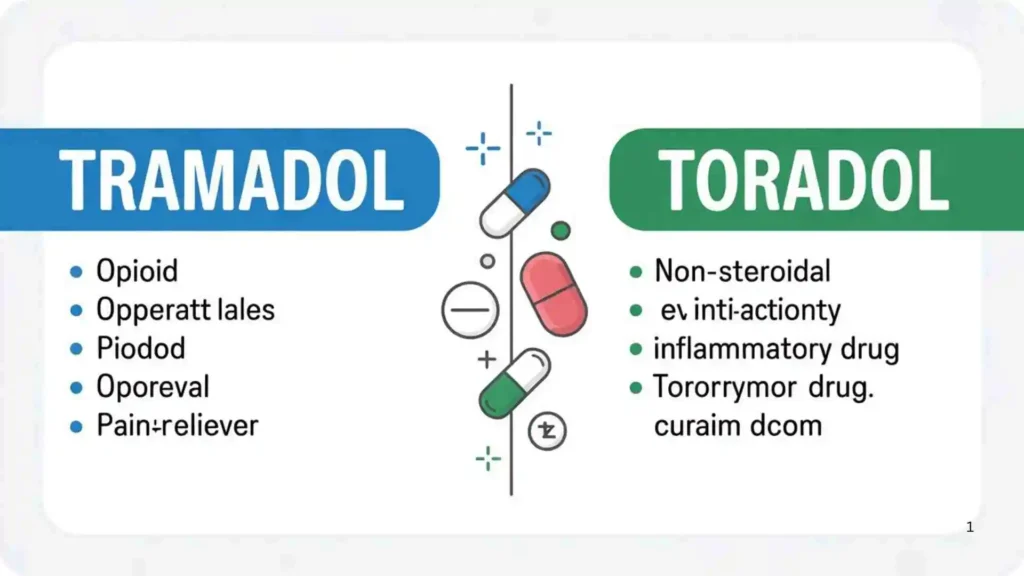
| Feature | Tramadol | Toradol |
| Drug Class | Opioid | NSAID |
| Addiction Risk | Yes | No |
| Reduces Inflammation | No | Yes |
| Use Duration | Can be longer term | Short-term (usually 5 days max) |
The biggest difference is addiction potential and inflammation control.
💪 Which Is Stronger?
Strength depends on the type of pain:
- Inflammatory pain (like post-surgery swelling) → Toradol may work better.
- Nerve or severe chronic pain → Tramadol may be more effective.
Neither is universally “stronger.” They treat pain differently.
⏳ Duration of Action
- Tramadol: 4–6 hours (longer for extended-release)
- Toradol: 4–6 hours
Toradol is usually limited to short-term use due to risk of stomach or kidney issues.
⚠ Side Effects Comparison
Tramadol Side Effects:
- Dizziness
- Nausea
- Constipation
- Risk of dependence
- Possible withdrawal symptoms
Toradol Side Effects:
- Stomach pain
- Risk of bleeding
- Kidney strain
- Increased blood pressure
🚨 Safety & Risk Factors
Tramadol:
- Controlled substance
- Risk of misuse
- May interact with antidepressants
Toradol:
- Should not be used long-term
- Not recommended for patients with stomach ulcers
- Avoid in severe kidney disease
Always follow a doctor’s prescription.
⚖ Pros and Cons
Tramadol
✔ Effective for moderate pain
✔ Useful for nerve pain
✘ Addiction risk
Toradol
✔ Reduces inflammation
✔ Non-opioid option
✘ Short-term use only
🏁 Which One Is Better?
In the tramadol vs toradol comparison, the better option depends on:
- Type of pain
- Medical history
- Risk factors
- Doctor’s recommendation
They are not interchangeable, and only a healthcare professional can determine the safest choice.
📌 Medical Disclaimer
This article is for informational purposes only and does not replace professional medical advice. Always consult a licensed healthcare provider before starting or changing medication.
✅ Conclusion
When comparing tramadol vs toradol, the main difference lies in their drug class and how they treat pain.
Tramadol is an opioid that changes pain perception in the brain, while Toradol is an NSAID that reduces inflammation.
Each has benefits and risks, and the best choice depends on your medical condition and doctor’s guidance.
Also Check These Posts
- Gorilla vs Lion Who Would Win in a Real Fight for 2026
- Vyvanse vs Ritalin Key Differences Effectiveness & Side Effects Explained for 2026

Emma Johnson
Hi! I’m Emma Johnson, a passionate writer and grammar enthusiast who loves exploring the magic of words. For as long as I can remember, I’ve been fascinated by how language shapes ideas and connects people. Through my writing, I aim to make grammar simple, fun, and accessible for everyone. I enjoy sharing tips, tricks, and little-known rules that help readers improve their writing confidently. When I’m not writing, you’ll usually find me reading classic novels, journaling, or sipping coffee while brainstorming new ideas. Writing is not just my profession—it’s my way of inspiring others to express themselves clearly and creatively.
Books by Emma Johnson:
-
Grammar Made Simple
-
Mastering English Essentials

