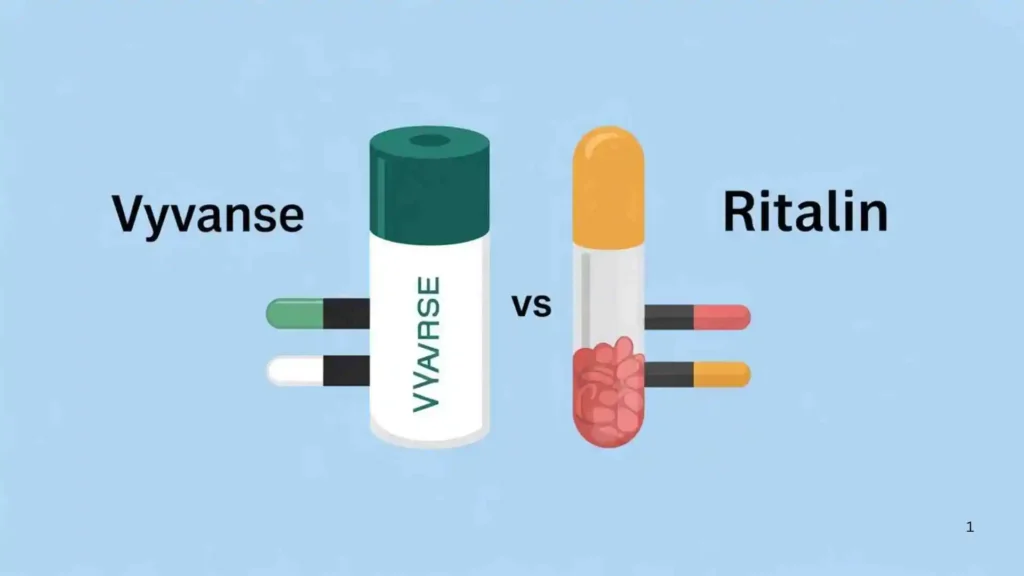
When comparing Vyvanse vs Ritalin, many people want clear, simple answers about which ADHD medication works better.
Both are prescription stimulants used to treat Attention Deficit Hyperactivity Disorder (ADHD), but they differ in how long they last, how they work in the body, and their side effect profiles.
Understanding these differences can help patients have informed conversations with their healthcare provider. In this guide, we break everything down in an easy-to-understand way so you can see how they compare.
💊 What Is Vyvanse?

Takeda Pharmaceutical Company markets Vyvanse, which contains lisdexamfetamine.
Key Facts:
- Long-acting stimulant
- Approved for ADHD (children & adults)
- Also approved for binge eating disorder
- Typically lasts 10–14 hours
Vyvanse is a prodrug, meaning it becomes active only after being metabolized in the body. This may lower abuse potential compared to some stimulants.
💊 What Is Ritalin?
Ritalin contains methylphenidate and is available in both short-acting and extended-release versions.
Key Facts:
- Fast-acting stimulant
- Used for ADHD and narcolepsy
- Short-acting version lasts 3–4 hours
- Extended-release lasts 6–8 hours
Ritalin has been prescribed for decades and is one of the most well-known ADHD medications.
🧠 How Do They Work?
Both medications increase dopamine and norepinephrine levels in the brain. These neurotransmitters improve:
- Focus
- Attention
- Impulse control
The difference lies in how gradually and how long they release these chemicals.
⏳ Duration of Effects
| Feature | Vyvanse | Ritalin |
| Onset Time | 1–2 hours | 20–60 minutes |
| Duration | 10–14 hours | 3–8 hours |
| Dosing | Once daily | 1–3 times daily |
Vyvanse generally lasts longer, which may reduce the need for multiple doses.
⚠ Side Effects Comparison
Common side effects for both include:
- Loss of appetite
- Insomnia
- Increased heart rate
- Anxiety
- Dry mouth
Because Vyvanse lasts longer, some people experience prolonged side effects. Ritalin may cause more noticeable “crash” effects when it wears off.
👶 Adults vs Children
Both medications are FDA-approved for ADHD in children and adults. Some patients respond better to one medication than the other due to individual brain chemistry.
There is no universal “best” option.
💰 Cost Comparison
- Ritalin (generic methylphenidate) is often cheaper
- Vyvanse may be more expensive unless covered by insurance
Generic options usually reduce overall cost.
🔒 Abuse Potential & Safety
Both are controlled substances. However:
- Vyvanse’s prodrug structure may reduce misuse
- Ritalin can be misused if crushed or altered
Always use exactly as prescribed.
⚖ Pros and Cons
Vyvanse
✔ Long-lasting
✔ Once-daily dose
✘ Higher cost
Ritalin
✔ Flexible dosing
✔ Lower cost
✘ Shorter duration
🏁 Which One Is Better?
In the Vyvanse vs Ritalin debate, the best choice depends on:
- Duration needed
- Budget
- Side effect tolerance
- Doctor’s recommendation
Many patients try both before finding the best fit.
📌 Important Medical Disclaimer
This article is for informational purposes only and does not replace professional medical advice. Always consult a licensed healthcare provider before starting or changing medication.
✅ Conclusion
When comparing Vyvanse vs Ritalin, both medications are effective for treating ADHD but differ in duration, cost, and side effect profiles.
Vyvanse offers longer-lasting effects with once-daily dosing, while Ritalin provides flexible dosing and a lower-cost option.
The right choice depends on individual needs, lifestyle, and medical guidance. Speak with your doctor to determine the best treatment plan for you.
Also Check These Posts
- MX vs ATV | Which Off-Road Ride Is Right for You for 2026
- Pepcid vs Tums | Which Heartburn Medicine Works Better for 2026

Sophia Miller
Hi, I’m Sophia Miller, a passionate language enthusiast and grammar lover. Ever since I was a child, I’ve been fascinated by the power of words and how proper grammar can transform communication. I’ve spent years exploring the intricacies of English, from punctuation quirks to sentence structures, and I love helping others master the art of writing clearly and confidently. Writing, teaching, and sharing tips has always been my way of connecting with fellow language lovers. When I’m not analyzing sentences, you’ll find me reading novels or sipping coffee while jotting down new ideas. Grammar isn’t just rules to me—it’s a way to express creativity with precision.
Books by Sophia Miller:
-
Mastering English Grammar Made Easy
-
The Writer’s Guide to Perfect Sentences